Family Plot
  • Home
  • Watch
    • TV Schedule
    • Full Episodes Online
    • How-to and Informational
    • Questions and Answers
    • This Week in the Garden
    • Garden Notes
  • Garden Topic Collections
    • Apple Trees: How-to and Information
    • Peach Trees: How-to and Information
    • Tomatoes: How-to and Information
    • Square Foot Garden Blog
  • Resources
    • Soil Testing
    • Extension Publications
    • Gardening Resources
    • Blogs
    • Organic Gardening
    • Articles
    • Privacy
  • Guests
  • Contact Us
    • Ask a Gardening Gardening Question
  • Search

Update

7/7/2022

0 Comments

 
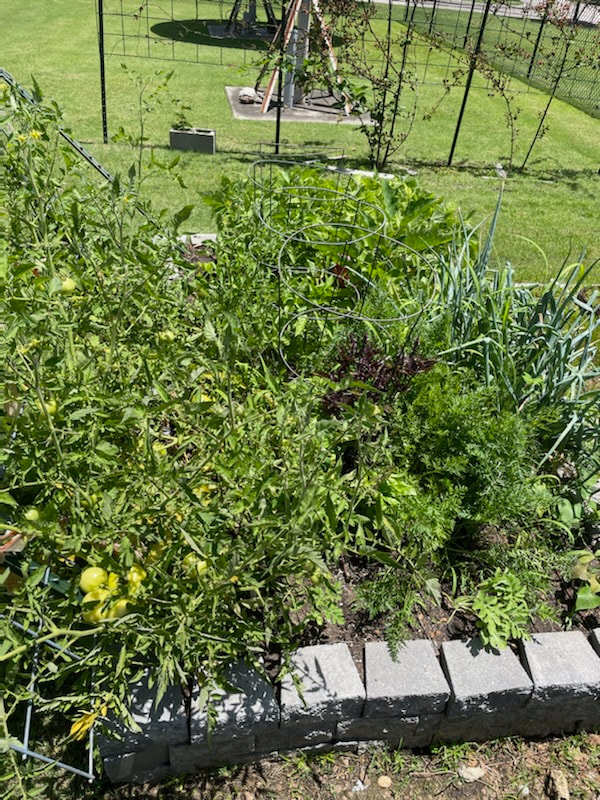
There is so much to update that I decided to do a video so I can talk about every plant.

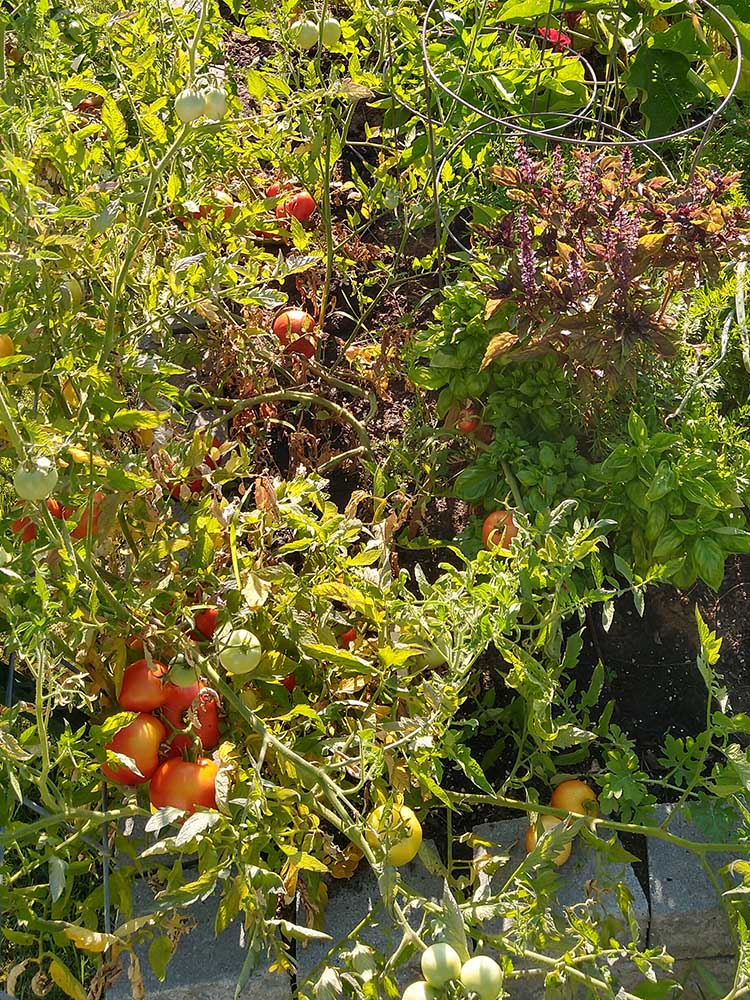
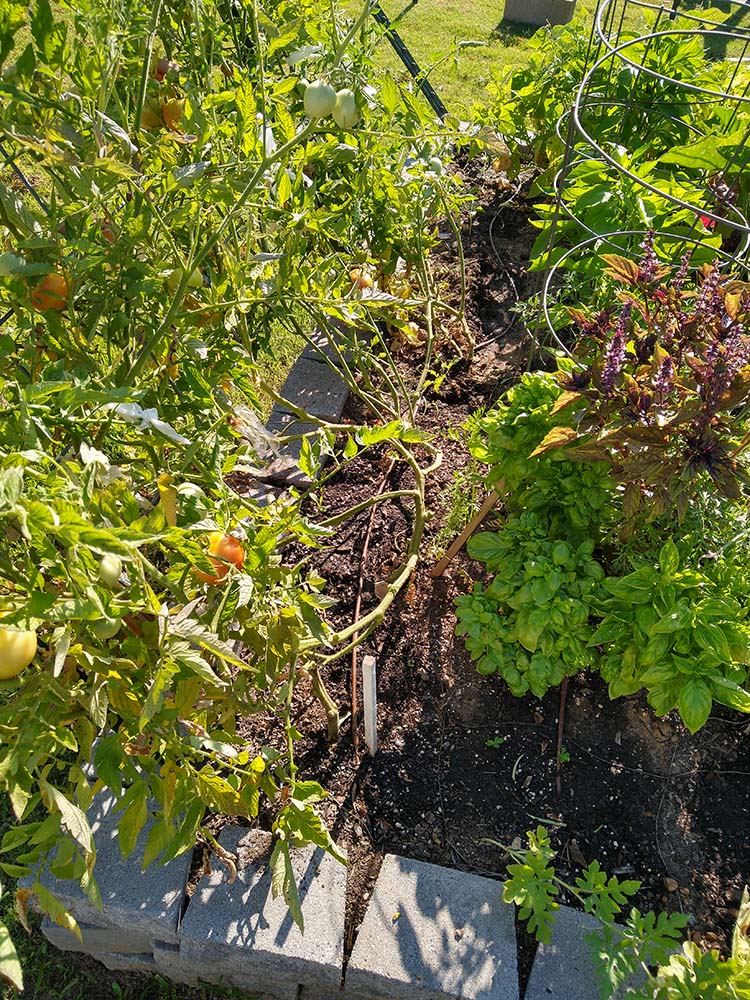
Tomato Leaf Removal

As I pointed out in the video there are some blighted leaves on the lower part of the tomato plants. This is normal for this time of year in the Mid-South. Blight is a fungus that is in the soil and it gets on the lower leaves when they are in contact with the soil or the fungus gets splashed on to the leaves from rain or overhead watering. The fungus then works its way up the plant. One of the ways to control blight is to remove all the diseased leaves from the plant. I took off all the diseased leaves and also a few more that were on or close to the ground. It opens up the bottom of the plant and makes it easier to see what is going on. Taking off some of the lower leaves does not harm the plant. Research I have read says the energy for growing the fruit comes from the higher leaves and it encourages the plant to grow more. I also sprayed with the fungicide Chlorothalonil.
Picture
Before. With all the dead leaves
Picture
After. There is now some air flow where the disease pressure is the highest.

Basil

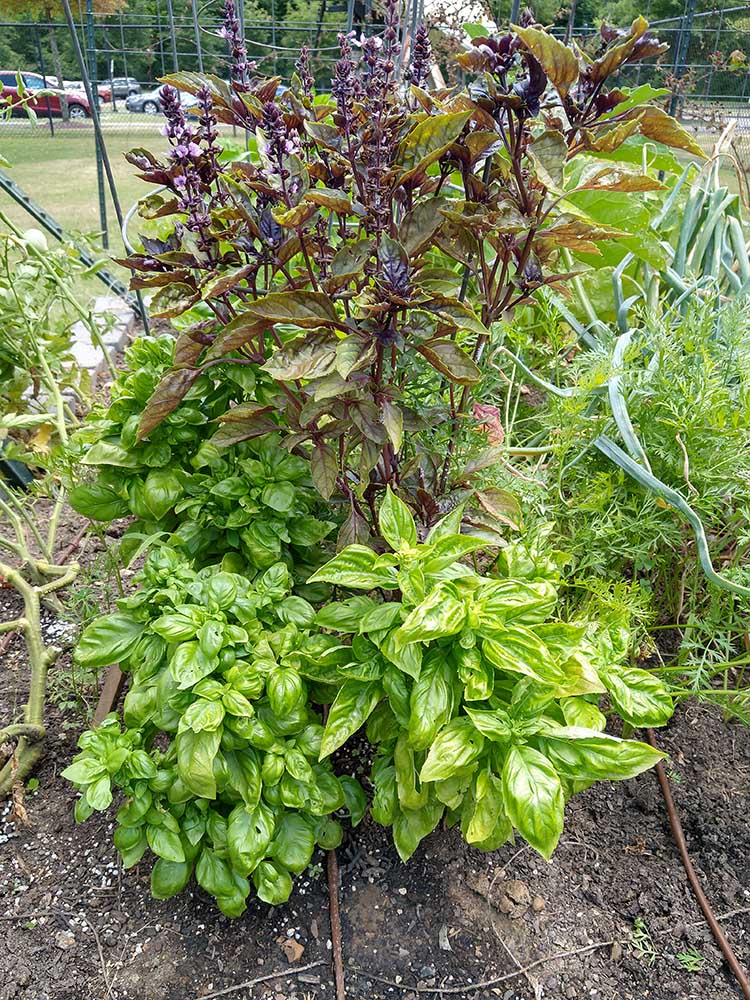
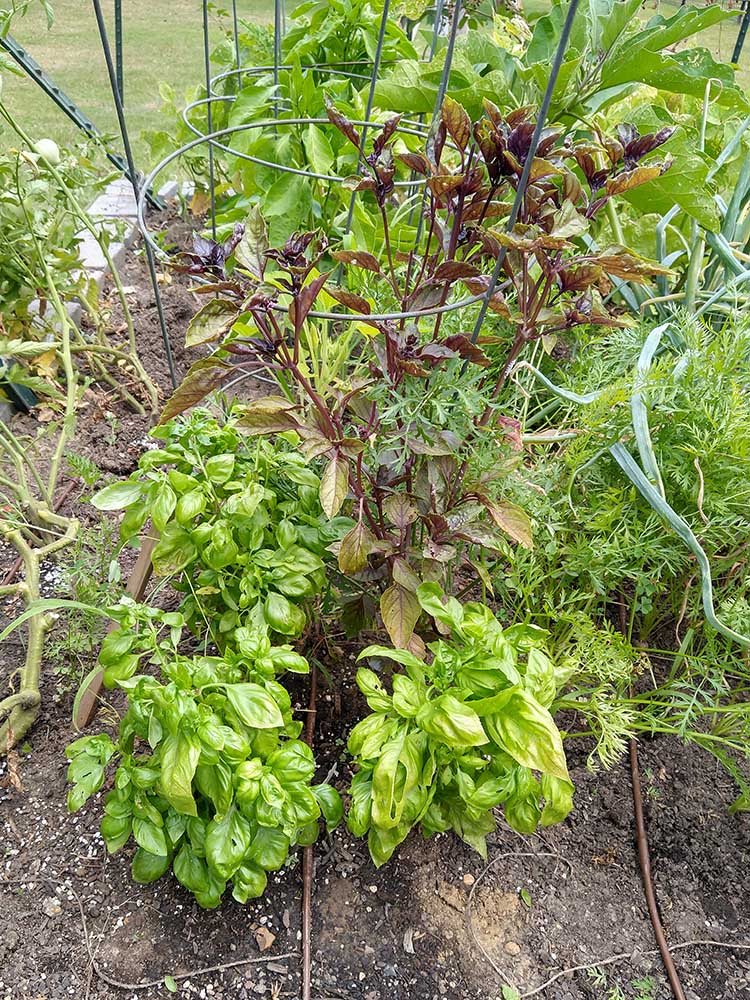
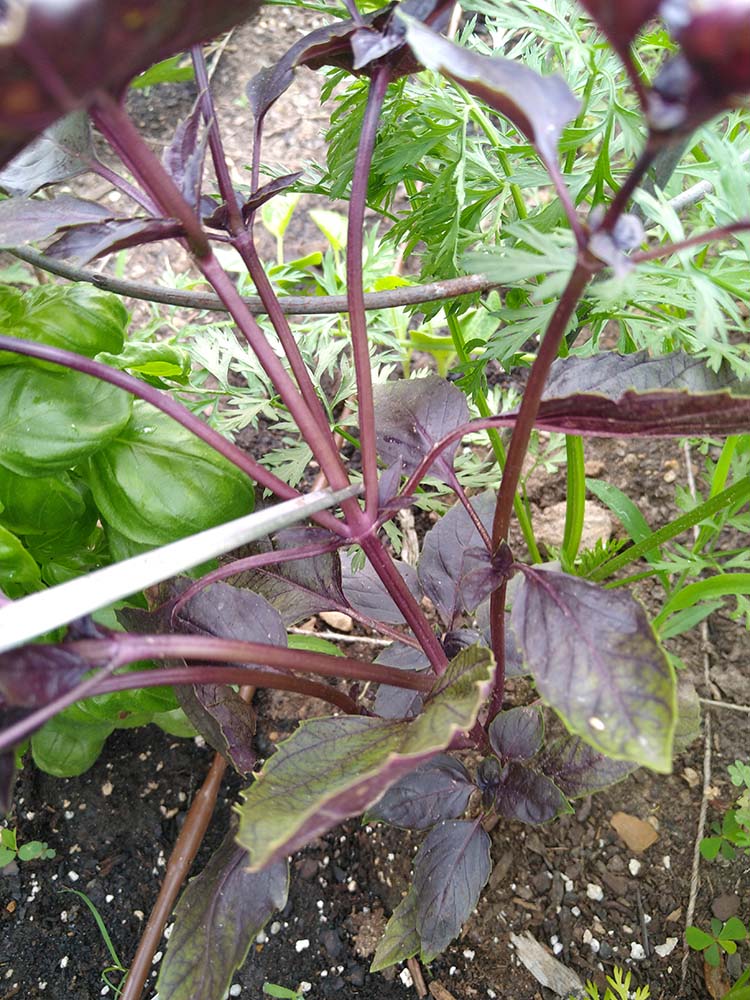
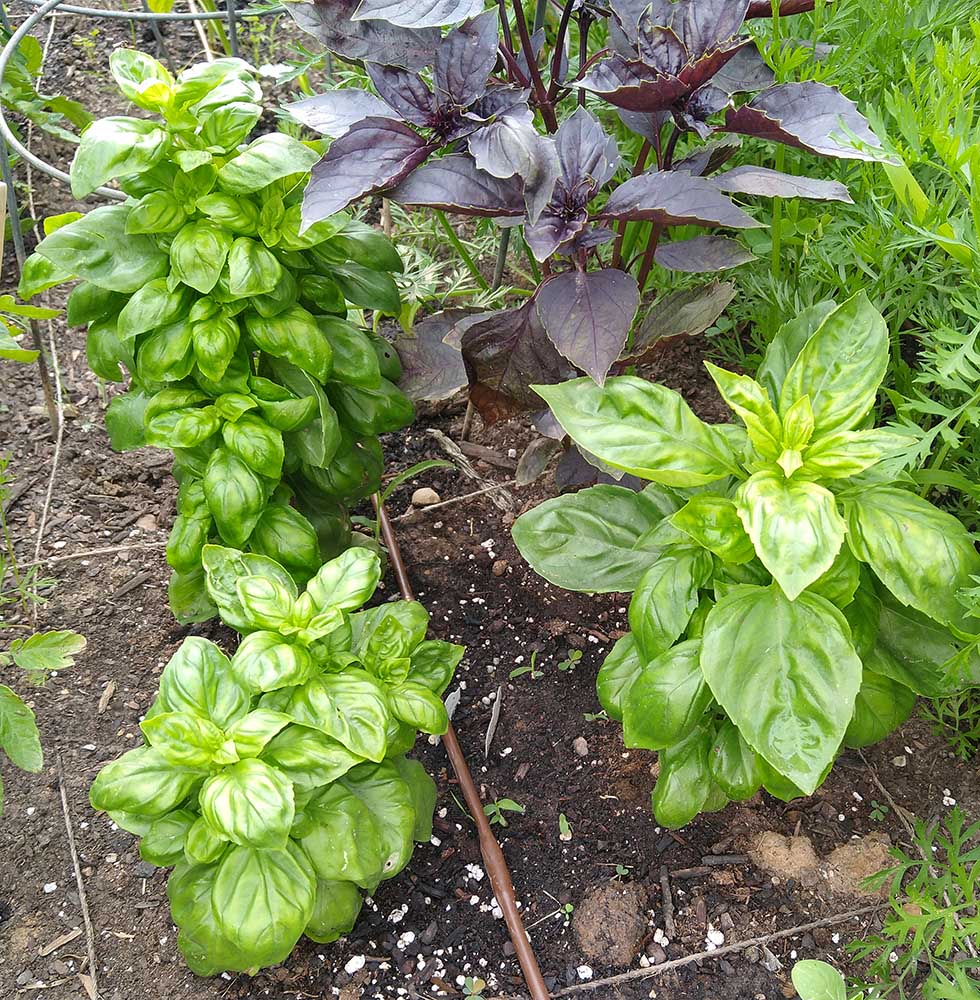
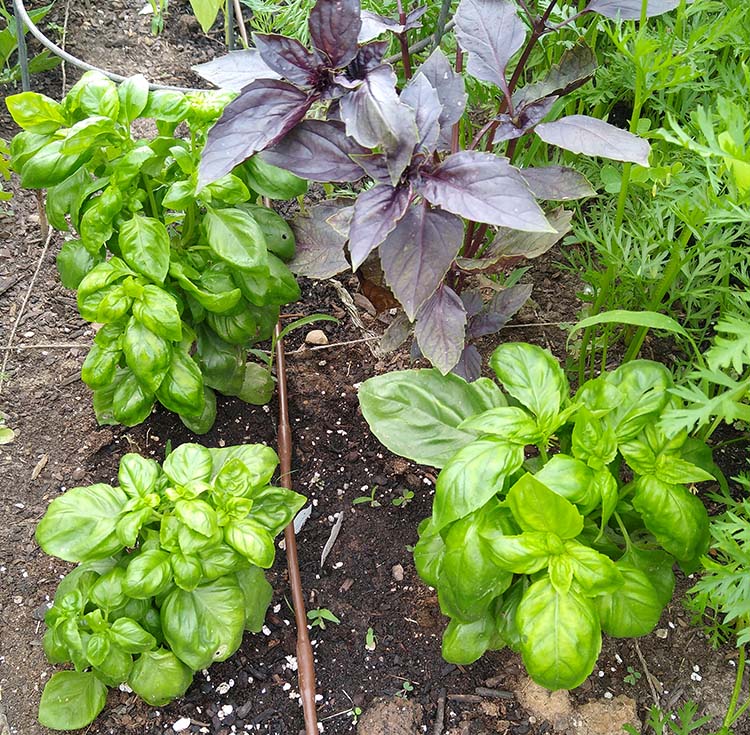
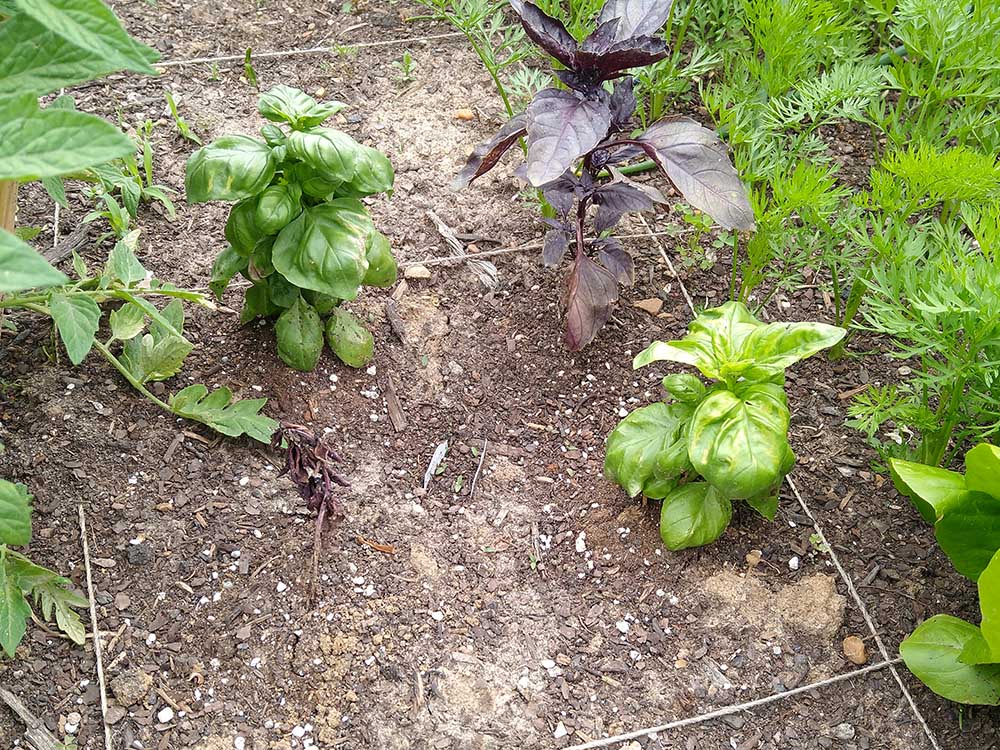
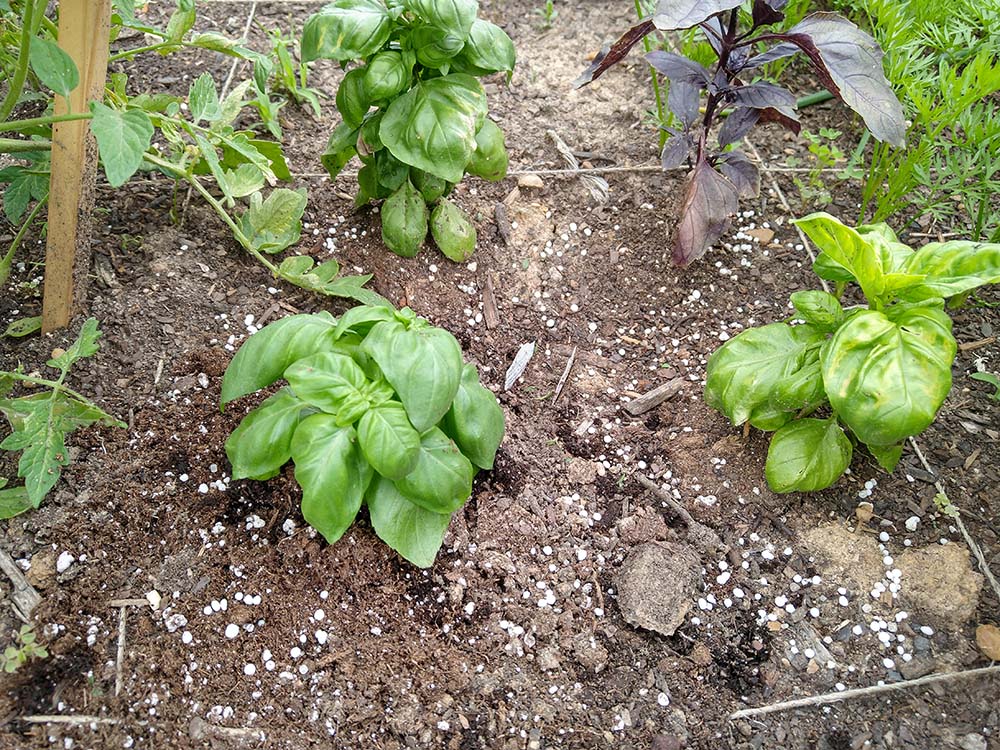
I trimmed back the basil. It was getting to the point where the plants were growing together. I wanted to harvest it while pruning it to encourage future growth. I talked about the method in an earlier blog post here. It felt like I was taking a lot off the plants, but they will bounce back. I also made sure I cut all the blooms off the purple basil.
Picture
Before
Picture
After. A good pruning job on any plant makes it look like you were never there.

Replanting Cucumbers

Picture
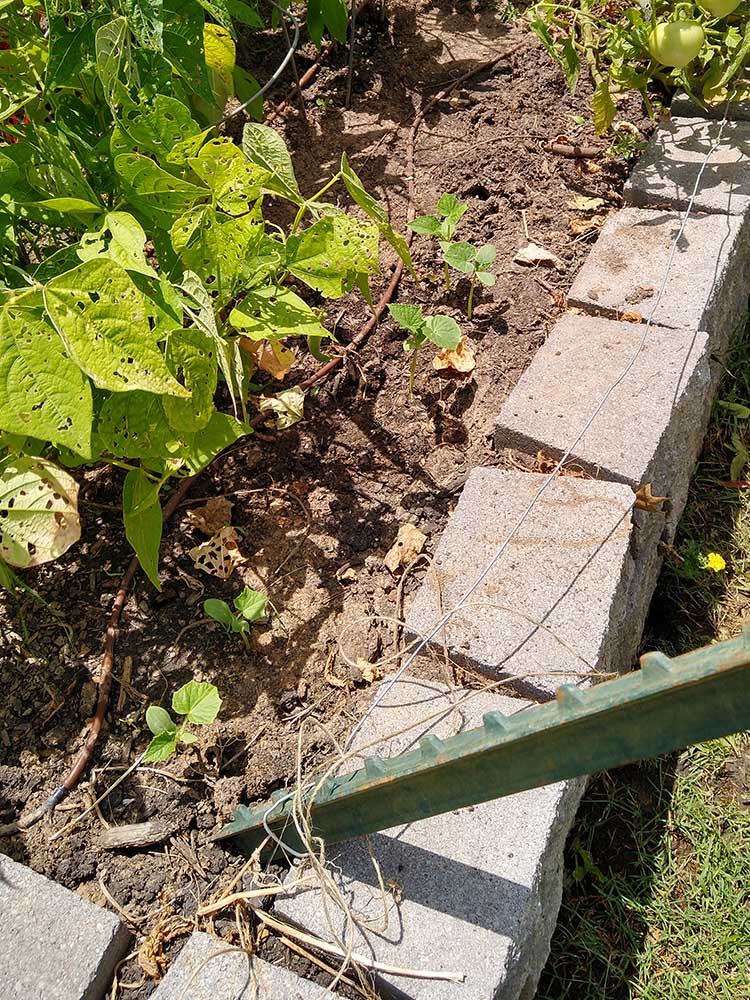
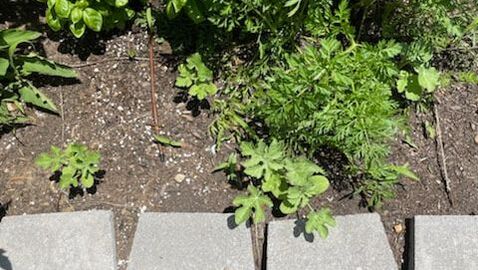
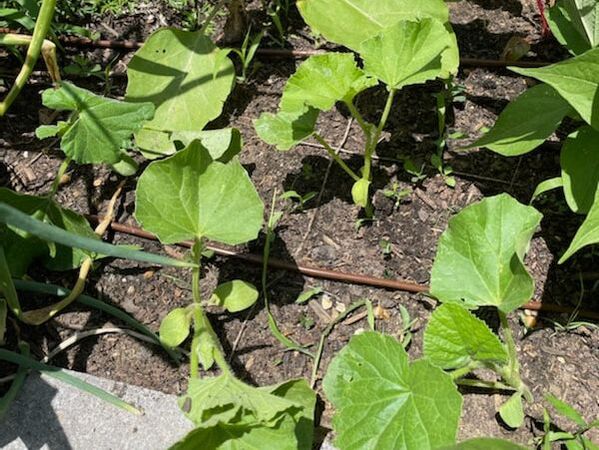
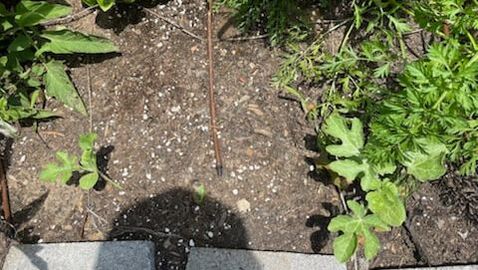
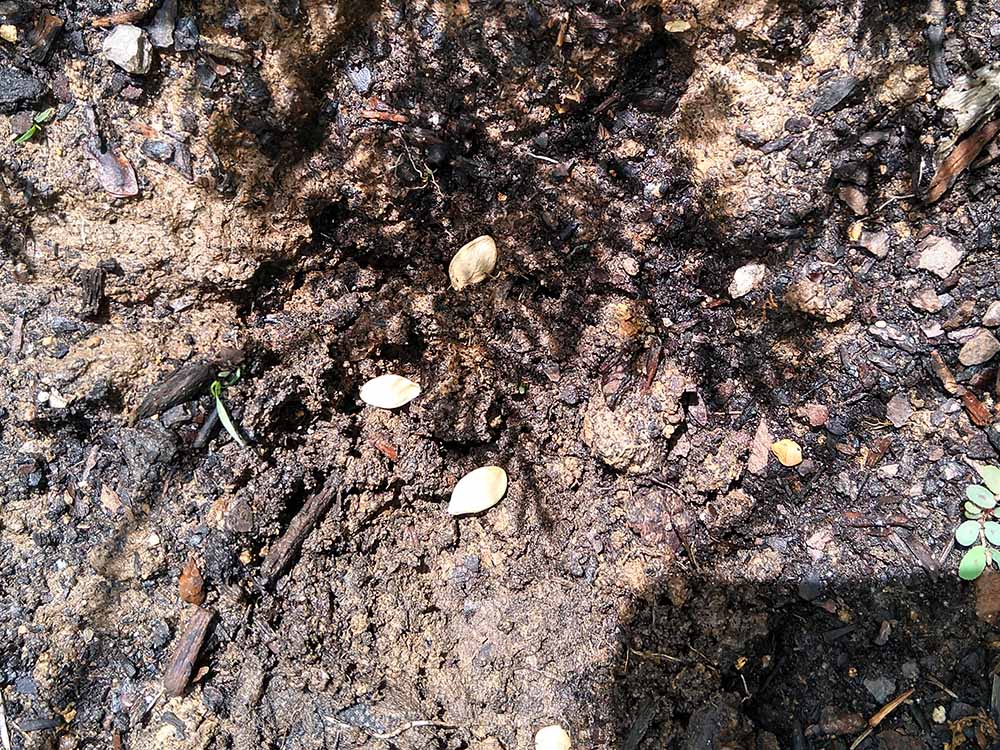
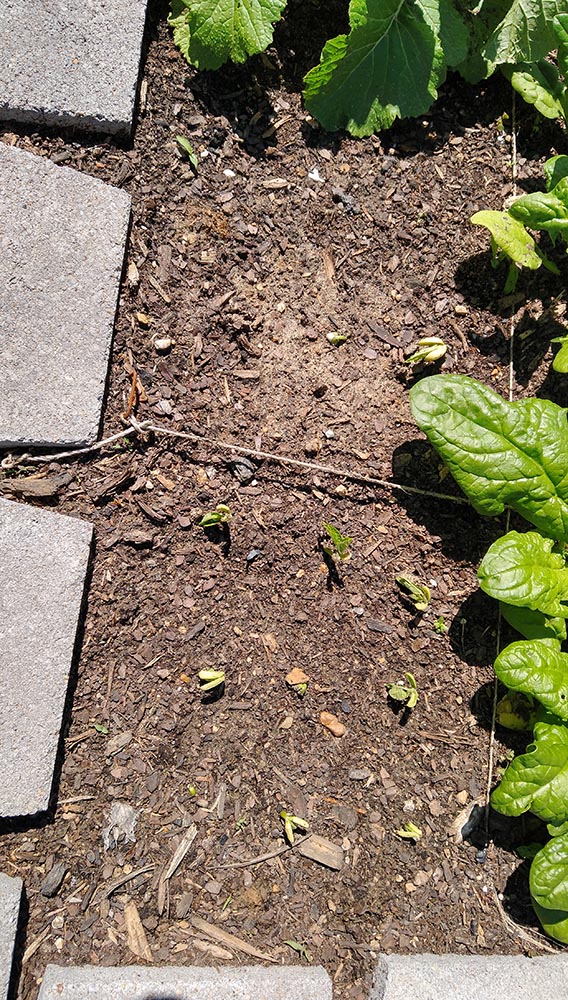
The cucumbers are up, but the germination was poor (about 50%) so I have planted replacement seeds where they did not sprout the first time. I am not sure why we have had such poor germination on some of the brand new seeds we purchased this year. We have a larger in-ground garden nearby and there were two whole packages of brand new corn seed that did not come up at all, while a section we planted in 5 year old seed had almost all of them come up.

The Harvest

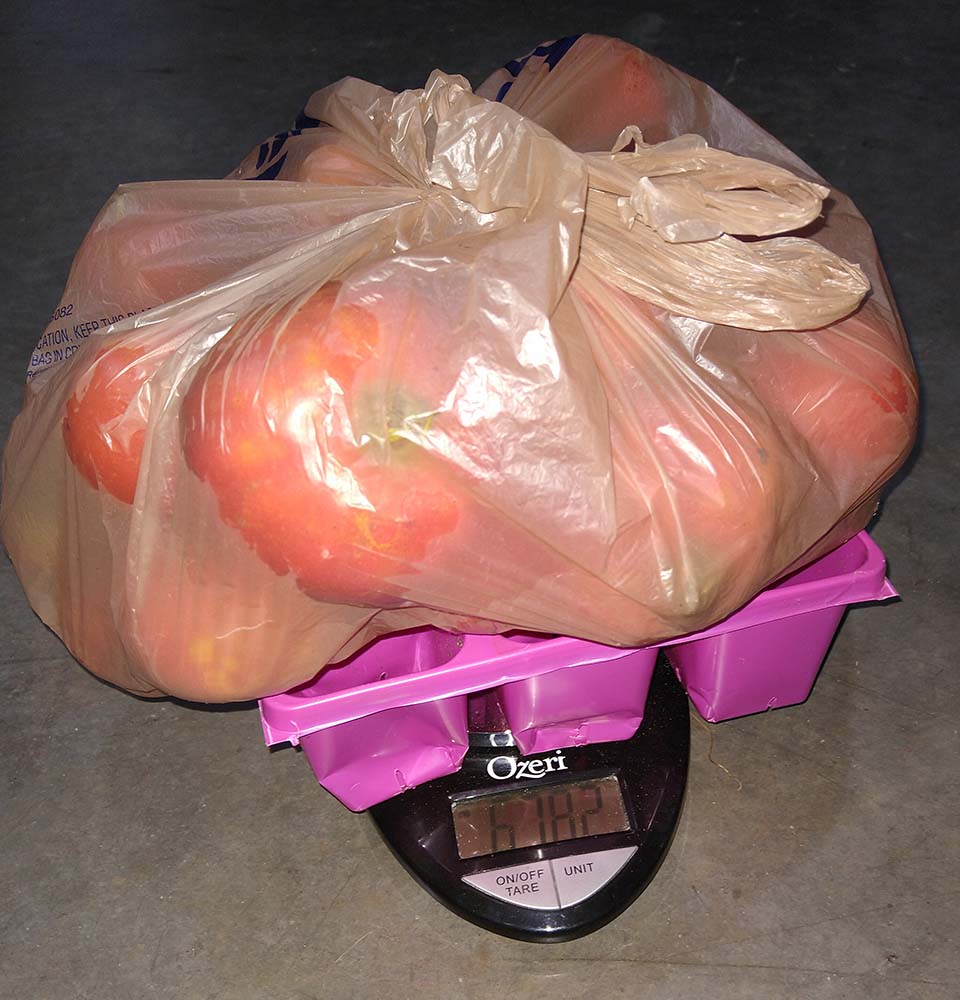
Like I said in the video I would be harvesting some of the veggies. This is the first tomato harvest of the year. I picked 6.78lb of tomatoes. There were 21 large tomatoes and 10 of the black cherry tomatoes as well. There are a few more that are about ready so there will be more soon.

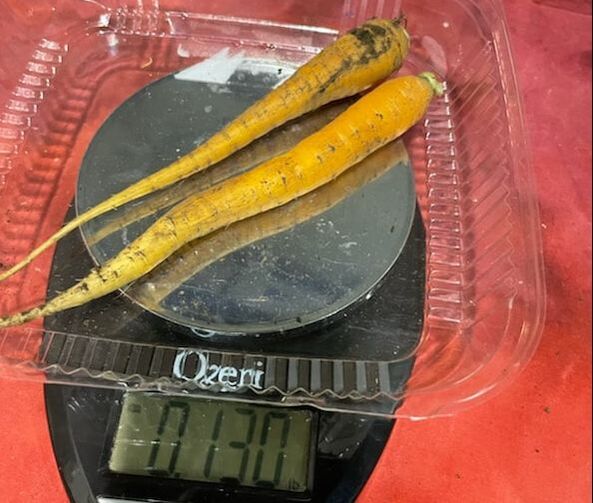
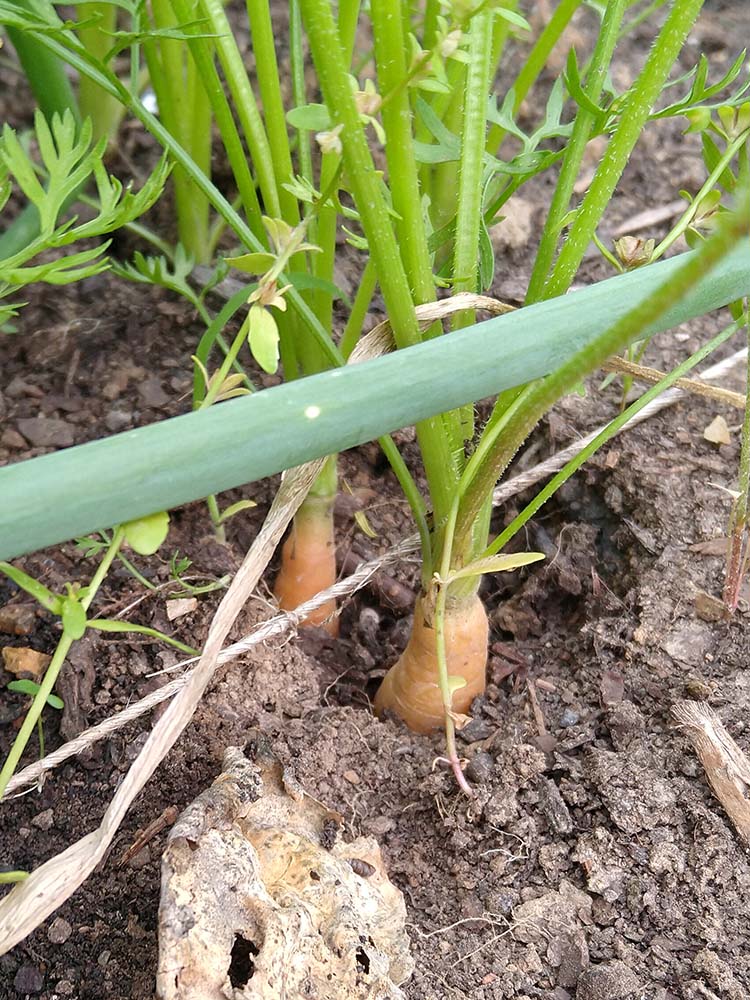
I also pulled 11 carrots for 1.05lbs. Most were straight, but there were two that had forked.

I got a few green beans for .084lb

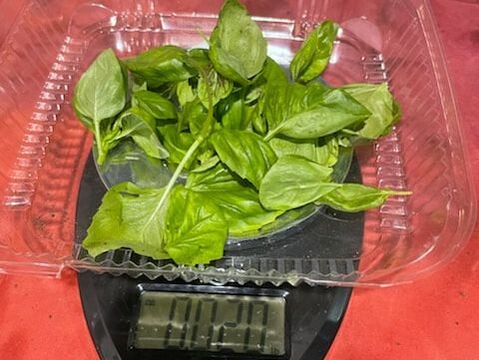
I trimmed the basil and got a very large harvest for only four plants, .38lb. I took it home and made two cups of pesto which is very good.
Picture
The purple seedling tray is to support the tomatoes so I can weigh the whole bag without them falling off the scale.
0 Comments

End of the Peas, Start of the Cucumbers

6/20/2022

0 Comments

 
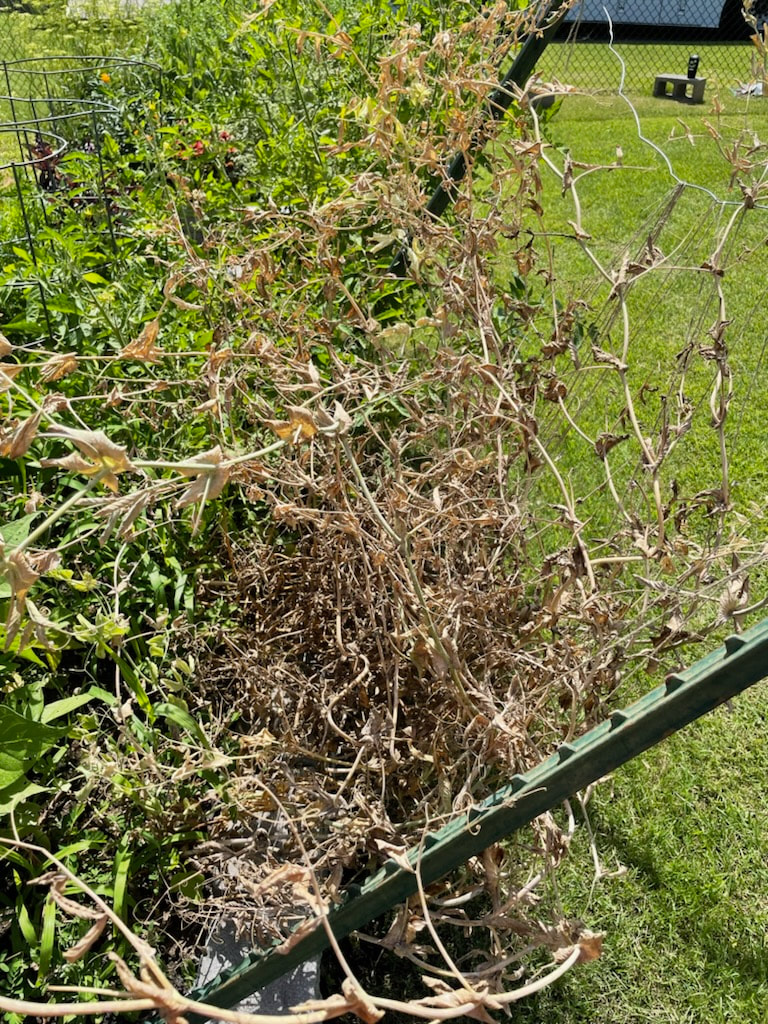
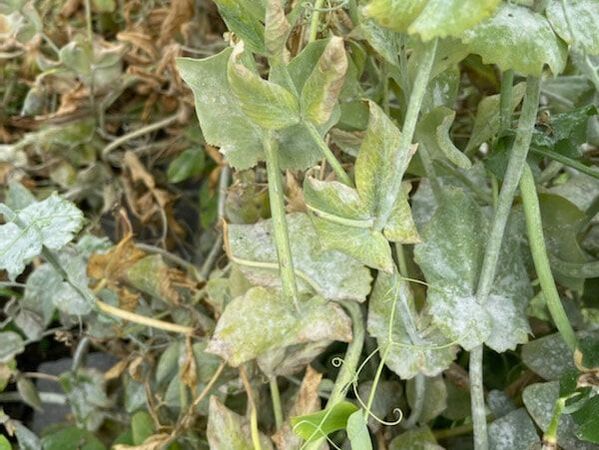
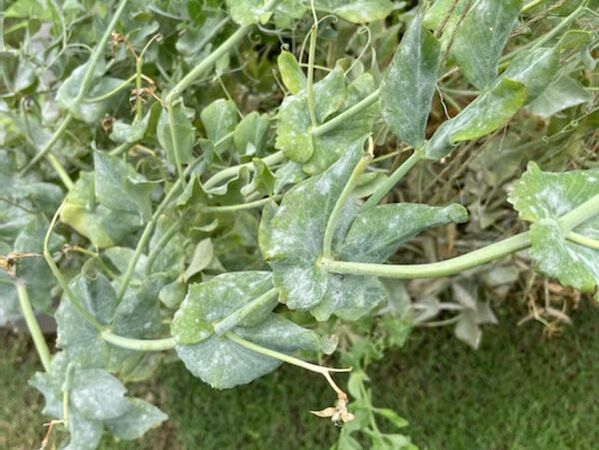
With the hot weather of late the peas shriveled up and died. They have done well with 3.72lb of peas produced. You may remember that we have only about 50% germination on the seeds we planted (17 out of 32)  so we could have done much better. Late in the season they were affected with powdery mildew and aphids, but we did not treat because they had only a little time left.

Pea Summary

Planted
February 8
First Harvest
April 29
Last Harvest
June 14
Number of Plants
17
Harvest
3.72lb
Picture

Planting Cucumbers

Picture
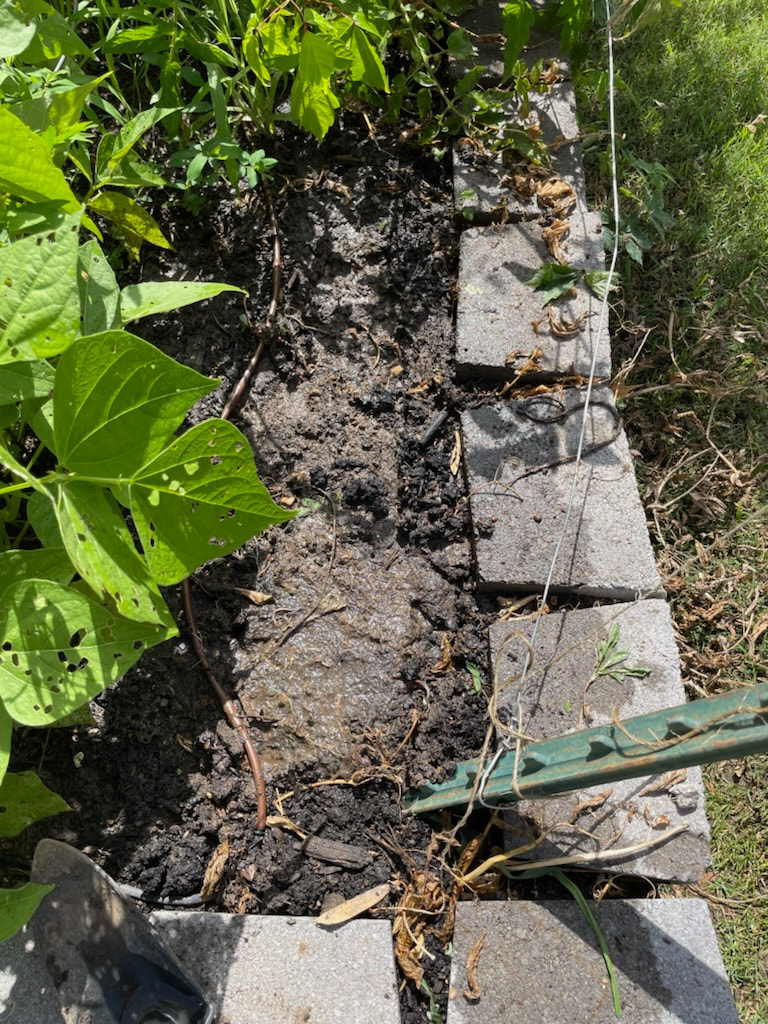
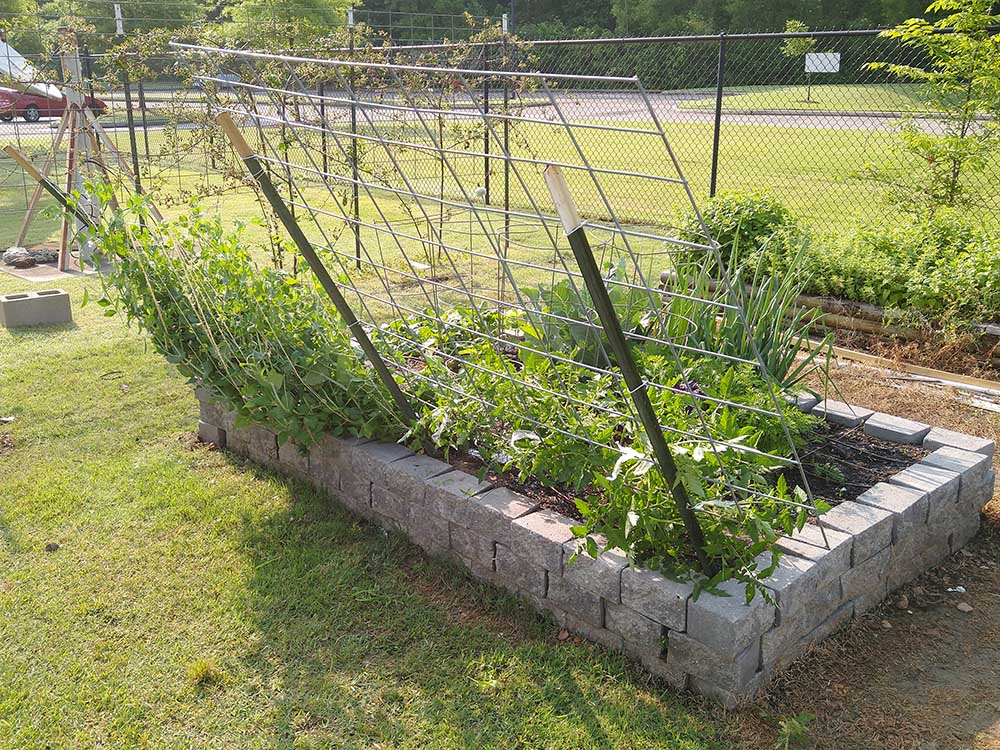
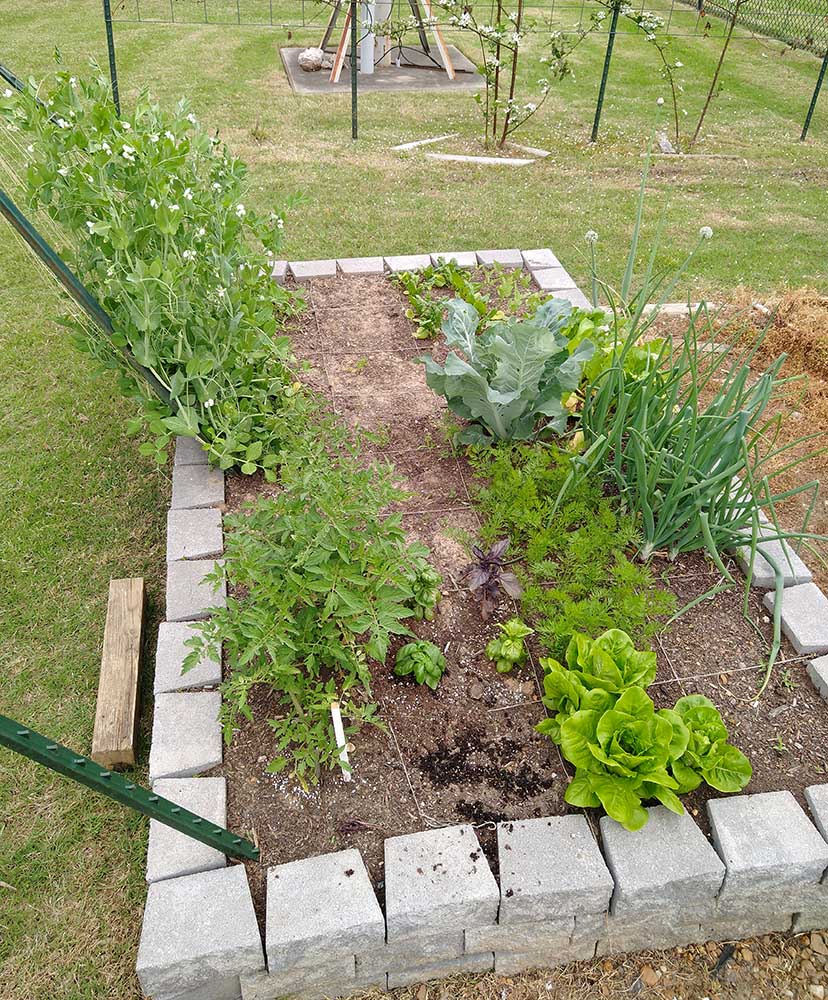
With the peas gone it is time to plant cucumbers in that space. We planted so we would have 2 plants per square. The cucumbers are located here because they can use the same trellis system that the peas used. This allows them to lean out over the lawn. Also, it is the north side of the garden so they do not shade any of the other plants.
We ended up letting the peas go longer than we originally intended because it was a cool spring and they kept producing. The cucumbers will be done long before the frost so there was no rush to get them switched out.
The rest of the garden is doing well and in the next update I will show how all the different plants are doing.
Picture
0 Comments

Thinning the Mellons

6/4/2022

0 Comments

 
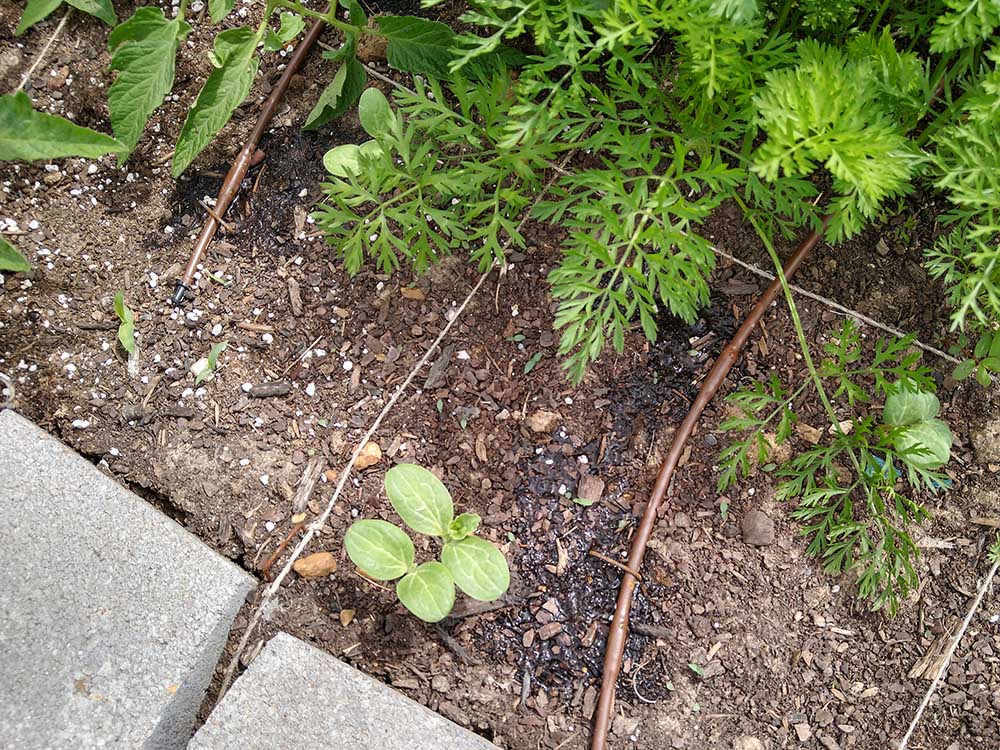
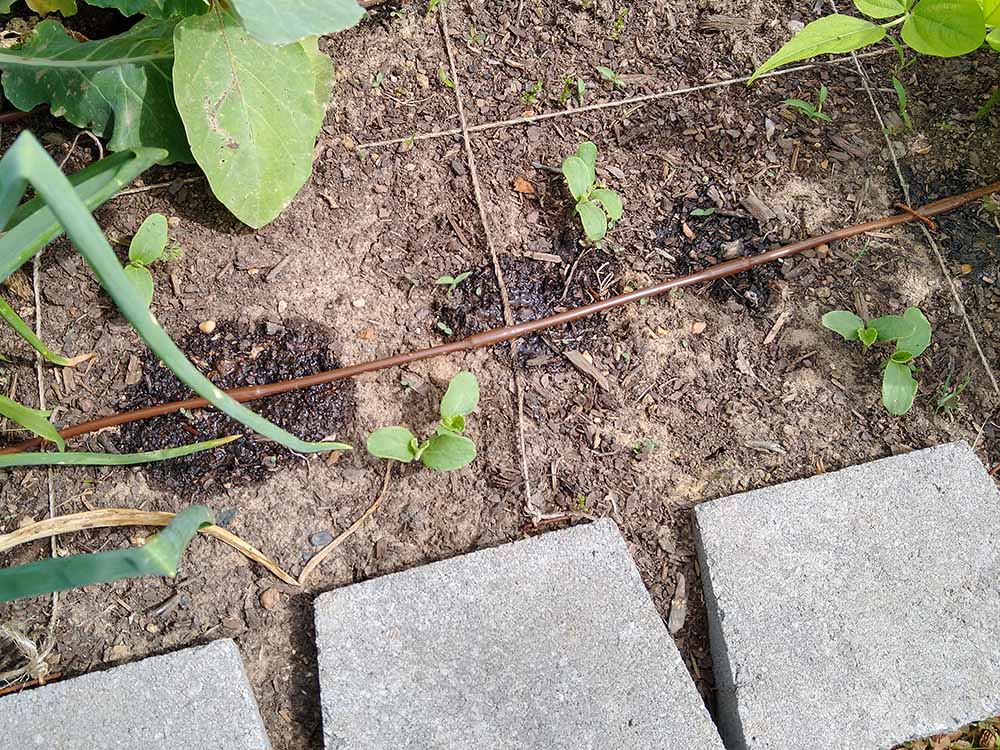
It is time to thin the watermelon, cantaloupe, and summer squash. We double-planted them in case some of them did not come up. Most did, but there were a few spots where one did not come up. The two seeds in each location were planted very close together so it is not possible to pull one plant and not damage the roots of the other.  So, we used the scissors again to thin.  When thinning you want to make sure the plants are developed enough to tell which ones are the healthiest and look the best. Then we just carefully snip off the stem of the other one. Unfortunately, you can't leave both because they will compete for nutrients in the soil and neither plant will do as well.
Picture
Watermelon before thinning
Picture
Cantaloupe after thinning
Picture
Watermelon after thinning

First Carrots 

Picture
Also we got some of our first carrots. One of the great things about having a raised bed when you have hard soil is the carrots don't have to fight the soil so they end up straight and long. These carrots are a little small so we will leave the others in the ground a little longer.

Peas

The powdery mildew on the peas is getting worse, but we are still not going to do anything about it. They only have a little while to go and are starting to slow down. In a week or so we will probably pull them out and plant the cucumbers.  
Picture
Picture

Basil Harvest 

Also we have been picking a small amount of basil. The plants are continuing to grow and we will have larger harvests in the future. What we are getting now is enough to add to a meal. 
Picture
0 Comments

All the Squares are Full. Let's Grow Some Summer Veggies!

5/25/2022

1 Comment

 
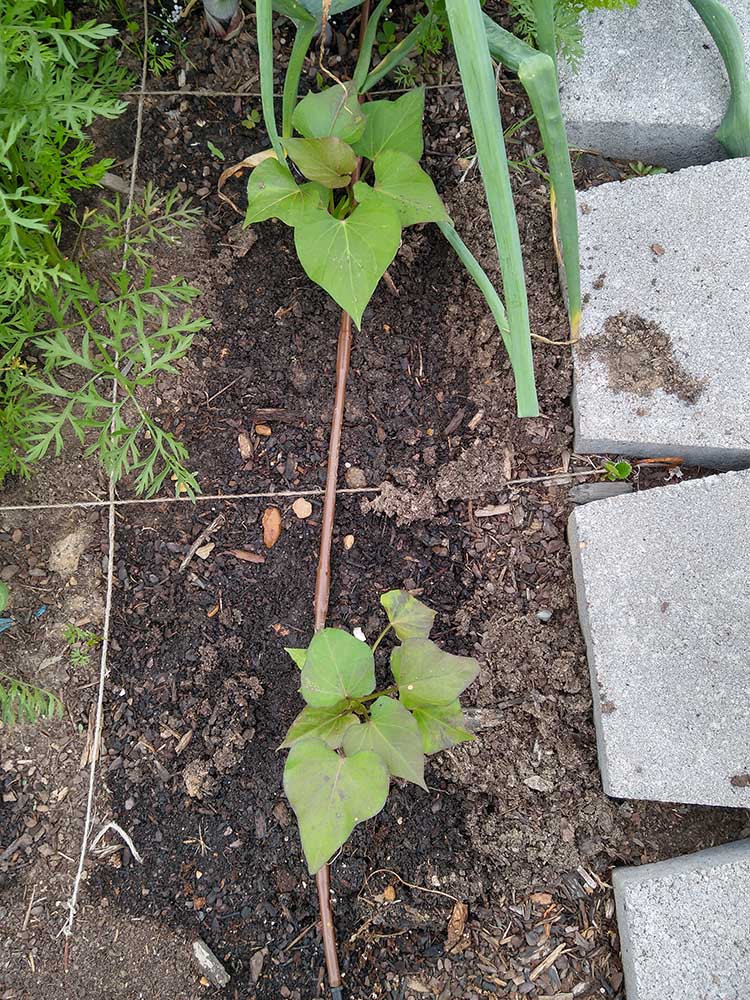
I finally found some sweet potato slips at the store so they are now in the ground in the south-west corner of the bed. Now the bed has plants growing in every square. The sweet potatoes are in the corner because they like to run. We will have to watch them carefully and steer them to make sure they run over the edge of the garden and into the walkway. If they are allowed to run into the garden they will take over.
Picture
Picture
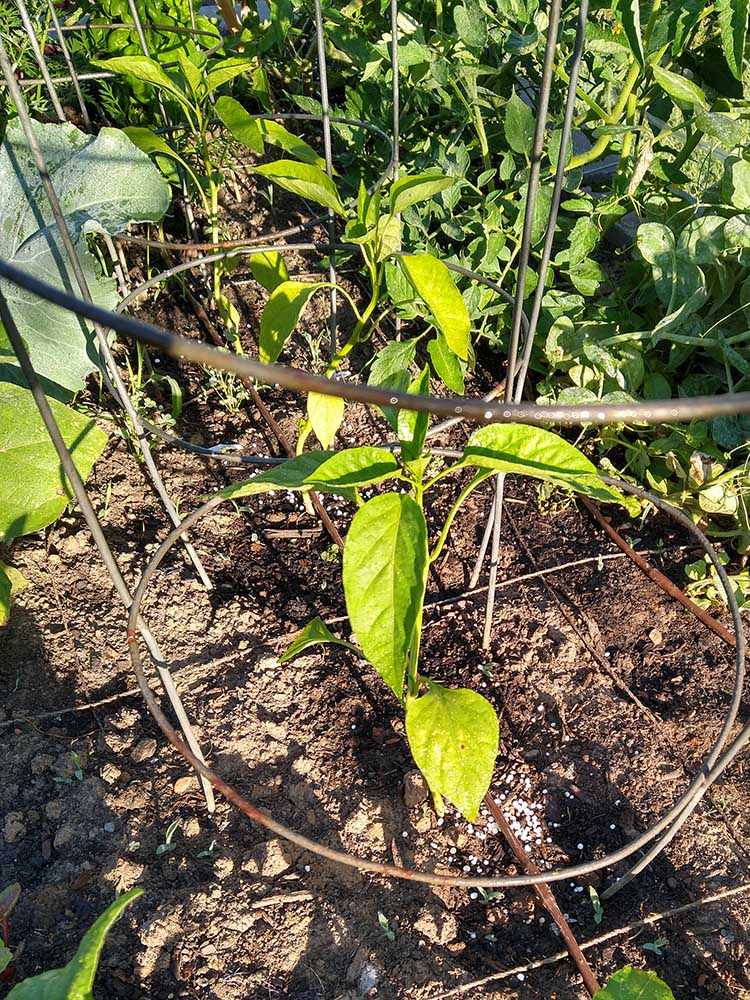
The peppers are a light green color. This is a sign of a nutrient deficiency, probably nitrogen. The good drainage of raised beds means the nitrogen is washed out quickly. Even in a ground level garden it will only last 4-6 weeks. The rule of thumb is about a tablespoon of 34-0-0 nitrogen fertilizer per pepper and tomato plant every month or so. Too little fertilizer and the plant won't be healthy, too much and it will grow lots of leaves  but no fruit. I side dressed the peppers and tomatoes with a little less than one tablespoon per plant because they are so close together they will get each other's nitrogen.
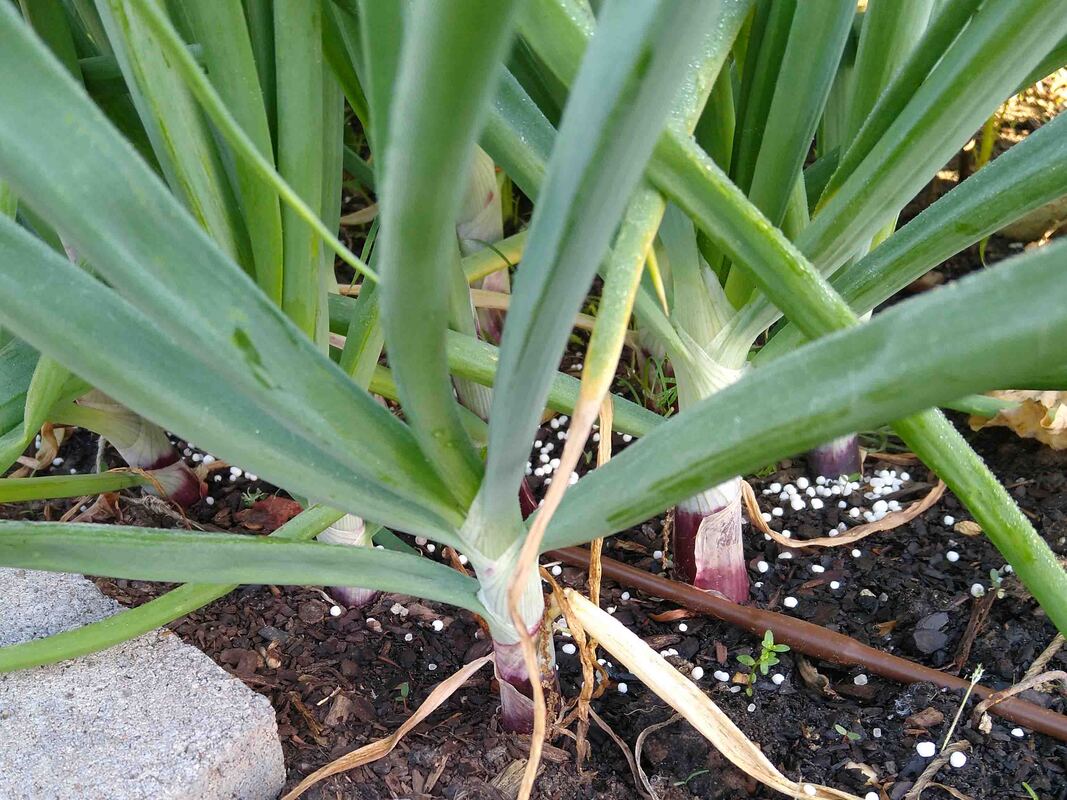
I also fertilized the onions with nitrogen. I would have done it much earlier, but I realized that the nitrogen I added a few months ago also caused the cauliflower to grow quite a bit. With too much nitrogen fertilizer cauliflower will not head. So, I held off fertilizing again until the cauliflower was picked. Now that is is gone I put about a little more than a tablespoon of fertilizer per square on the onions. Note to the future: Don't plant onions next to cauliflower in a square foot bed.
Picture
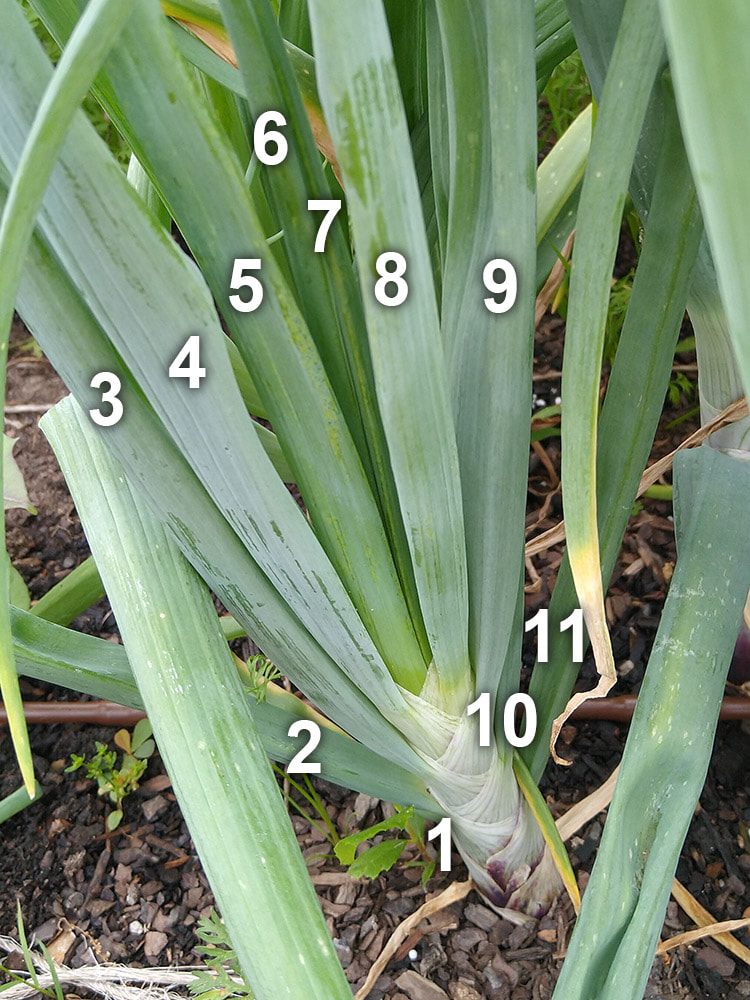
While on the topic of onions: Onions grow a top until the length of daylight is longer than a certain number of hours (usually 12, 14 or 16 depending on the type). Then they switch and pull all the sugars from the leaves down into the root to form a bulb. So the objective of the gardener should be to grow that top as much as possible. Nitrogen fertilizer aids in that, but once the bulb starts to form you don't want to add any more nitrogen because it will reduce the store-ability of the onions. The "perfect" onion has 13 rings. Each of those rings corresponds to a leaf on the top. So ideally you want 13 leaves too. A new leaf will form every 2 weeks or so while the top is growing, which is why you want to get onions in the ground as soon as you can.  We have a few onions that have 11 leaves at this point and some large tops so we should have some good bulbs. We might even get some square onions because the bulbs grow into each other underground.
Picture
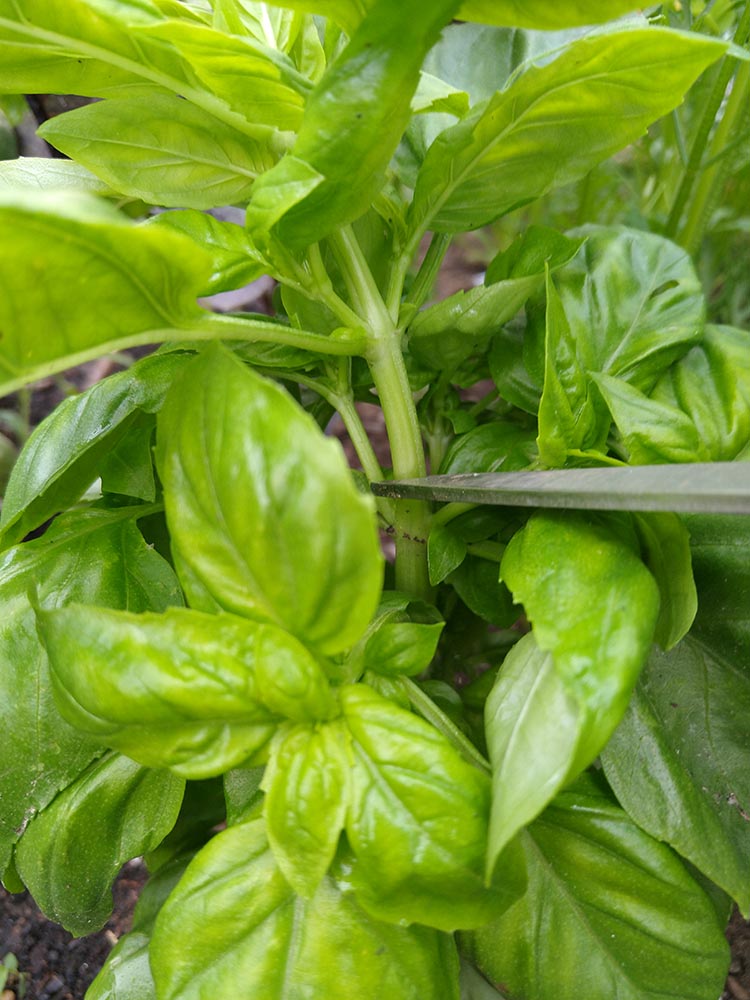
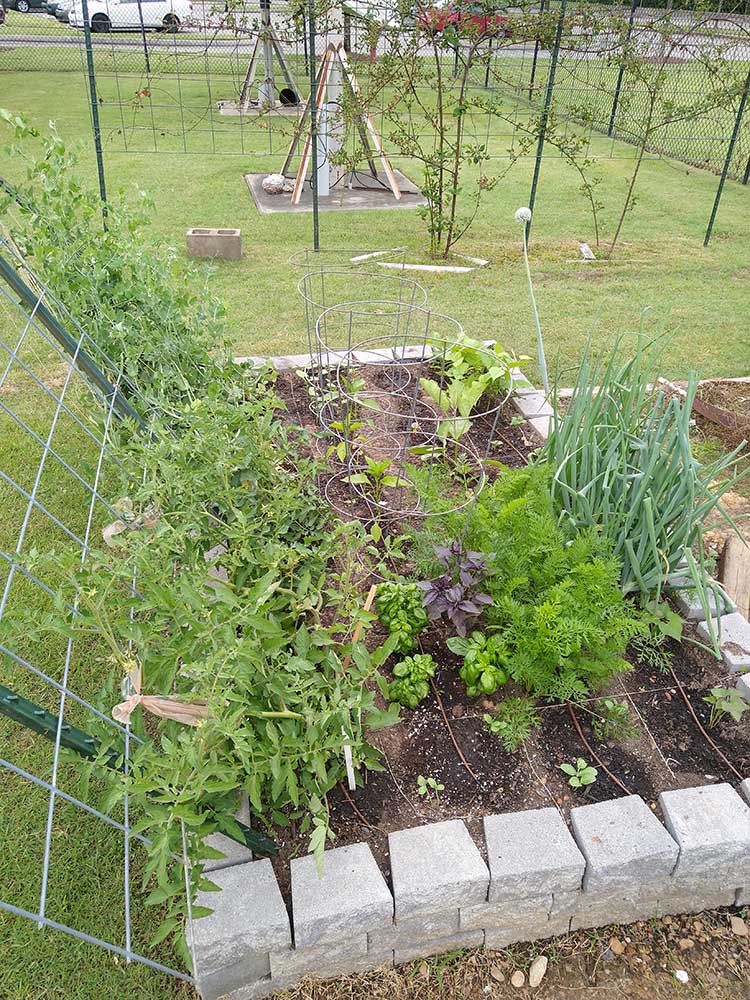
The basil has been growing now for about a month and so I pruned it. The purpose of this was not for harvest, although it will be used for that. The main reason is to get the plants to bush out. Right now they are primarily one stalk growing straight up. They are pruned just like any other shrub, just above a node. By pruning them just above a leaf they will form two branches from that point. More branches means more leaves which means more harvest. Joellen shows how to prune basil in this video from a few years ago.
Picture
Picture
Picture
Before
Picture
After. Any good pruning should look like no one was there
Some of the carrots are starting to form orange roots. When I picked the cauliflower I found some exposed roots. If they stay exposed, the part the sun hits will turn green. So I just covered them back up with some dirt. You can check to see if carrots are ready by gently digging down beside the plant to see how big the root is. A couple more weeks and these will be ready to pull.
Picture
Picture
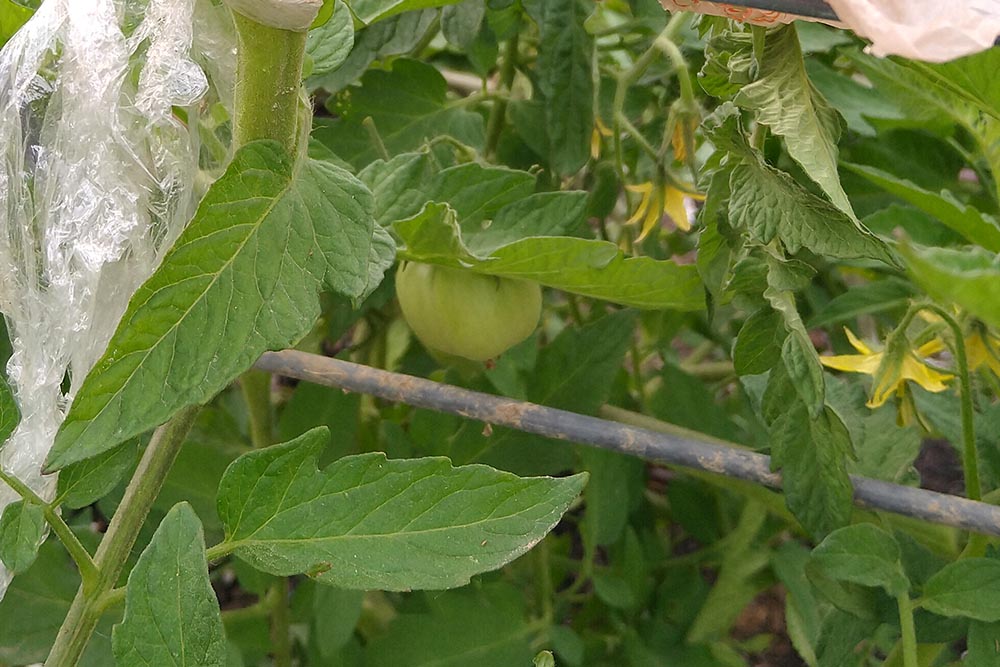
We have our first tomato on one of the plants Alainia Hagerty planted (see the video). It is about the size of a quarter now.
Picture
1 Comment

Well That's it for the Cool Season. It's Hot Now.

5/20/2022

0 Comments

 
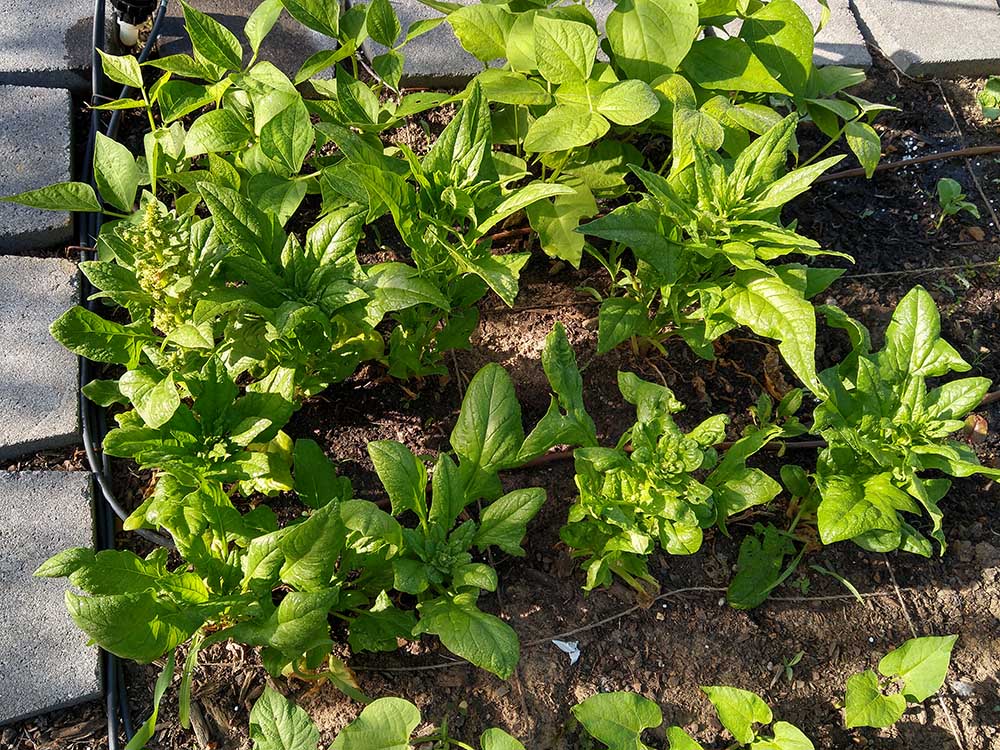
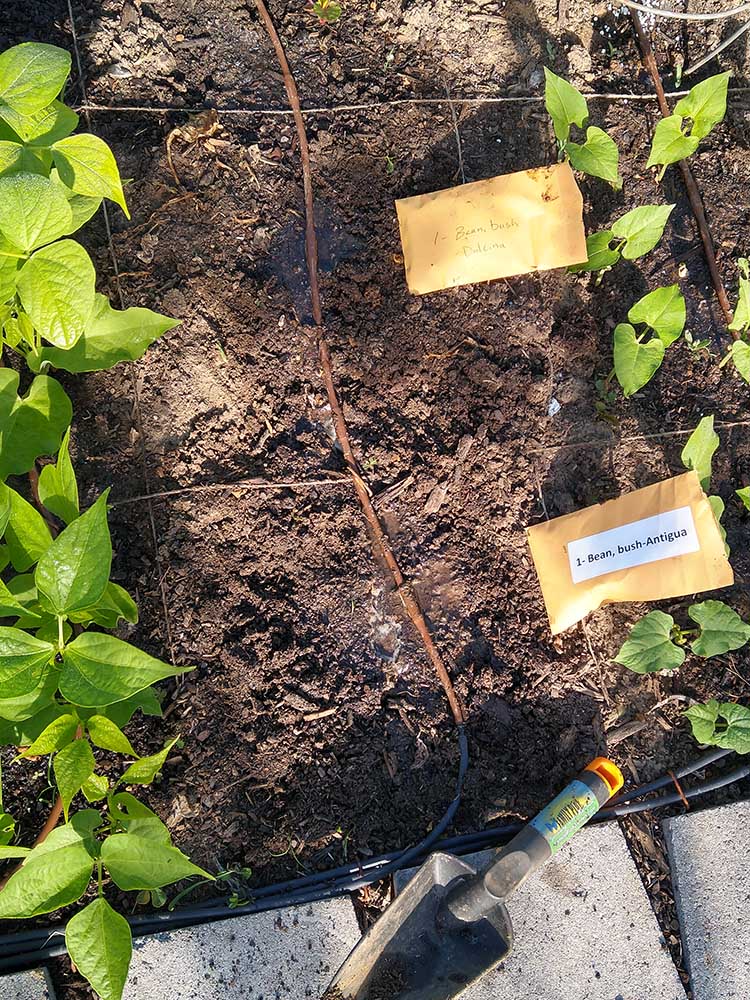
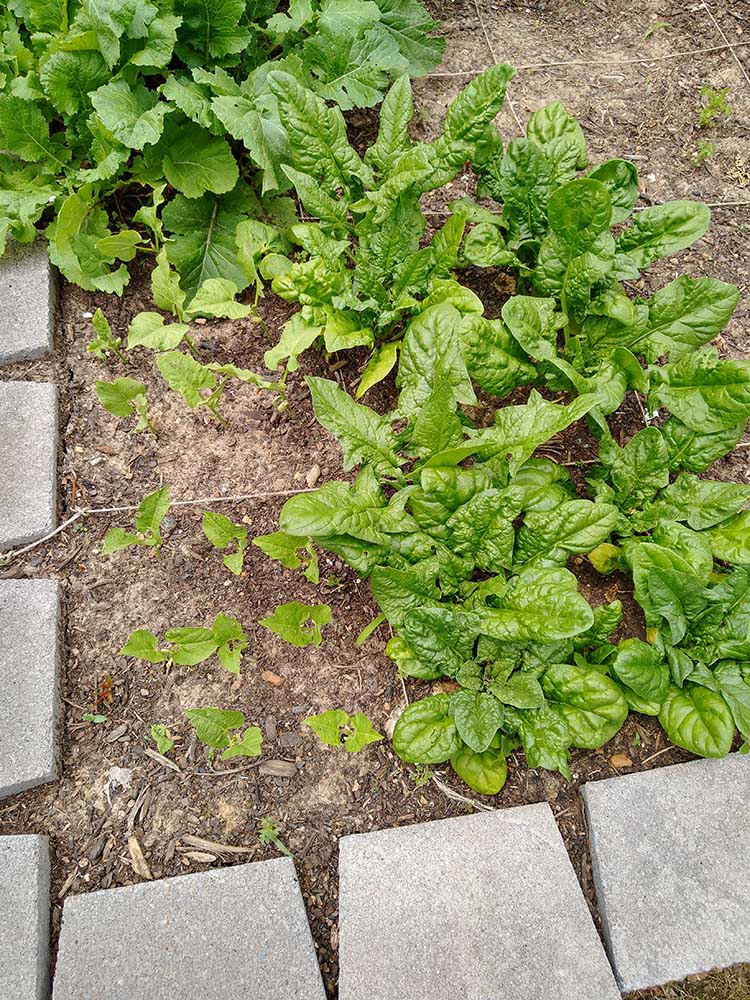
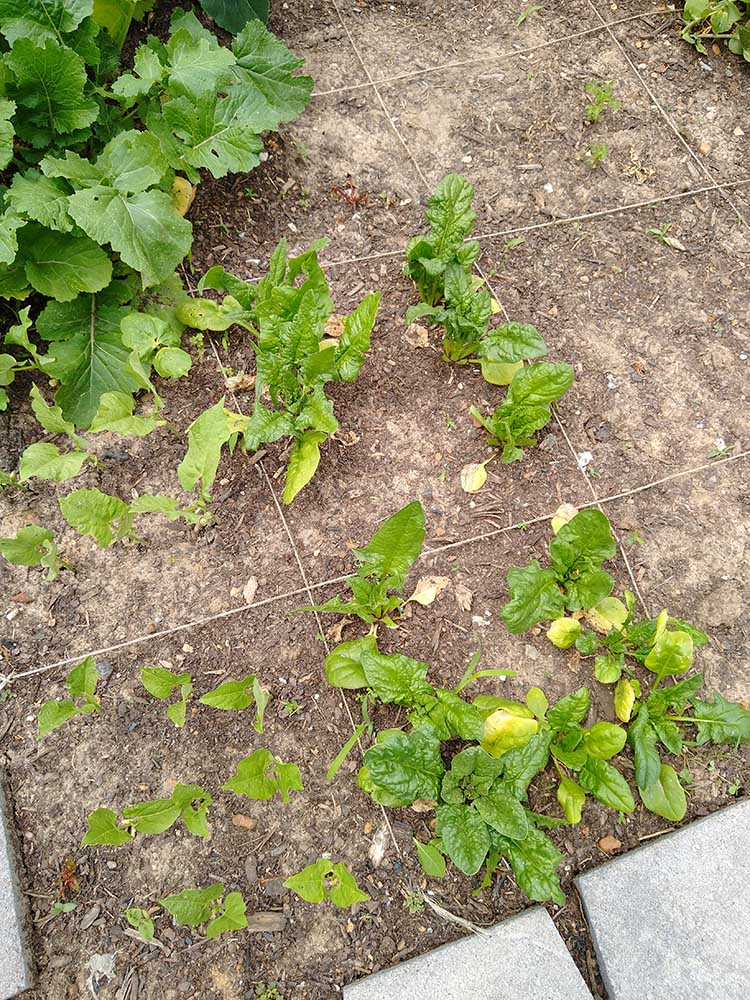
It has gotten hot enough that all the spinach has bolted. But, that is just in time because it's time to put in the third round of green beans. So out came the spinach and in went the beans. The two earlier sets of beans are doing well and the oldest one is starting to look like it will flower soon.
Picture
Bolting spinach
Picture
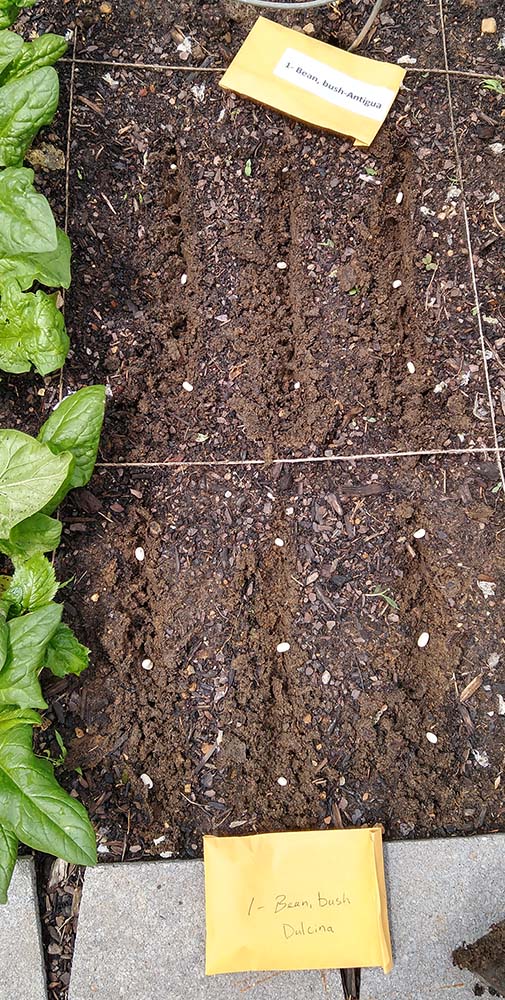
New Beans. This picture also serves as my record of which variety was planted in which square.
Picture
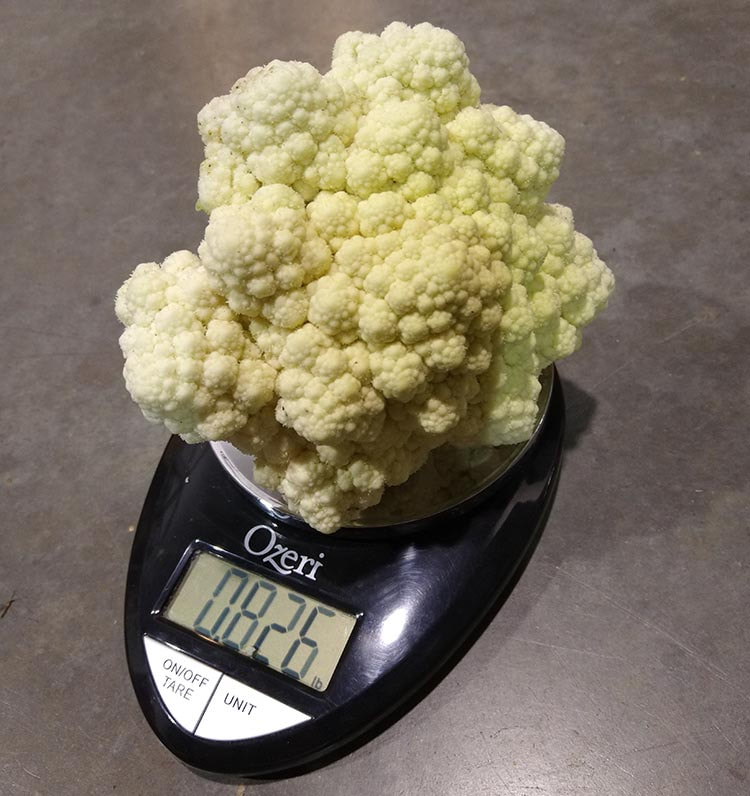
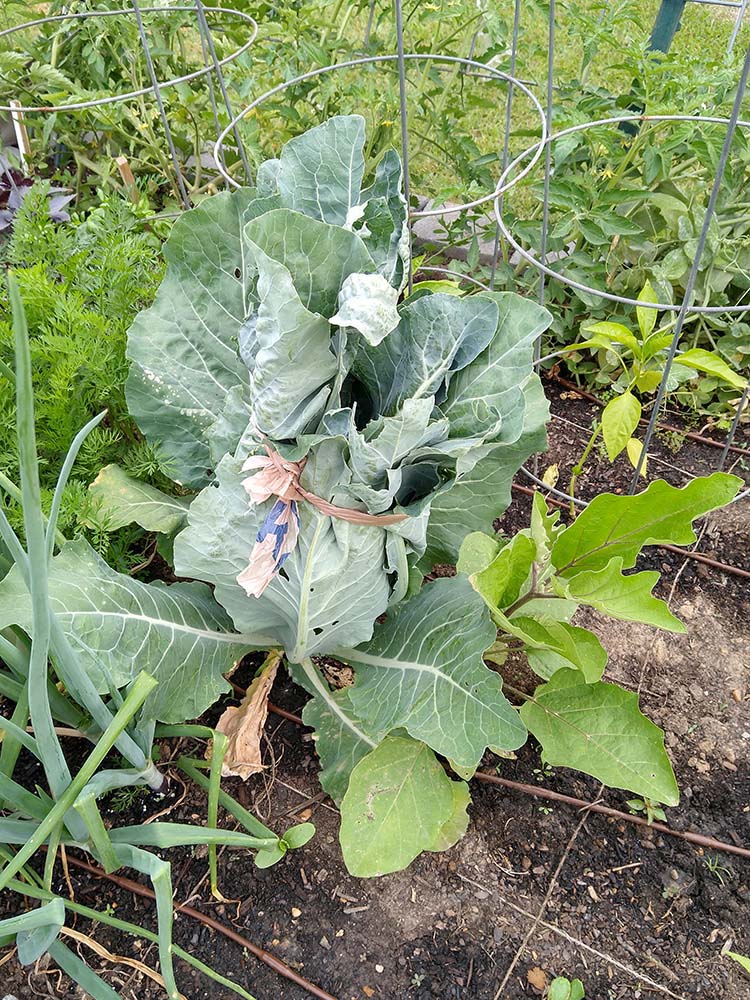
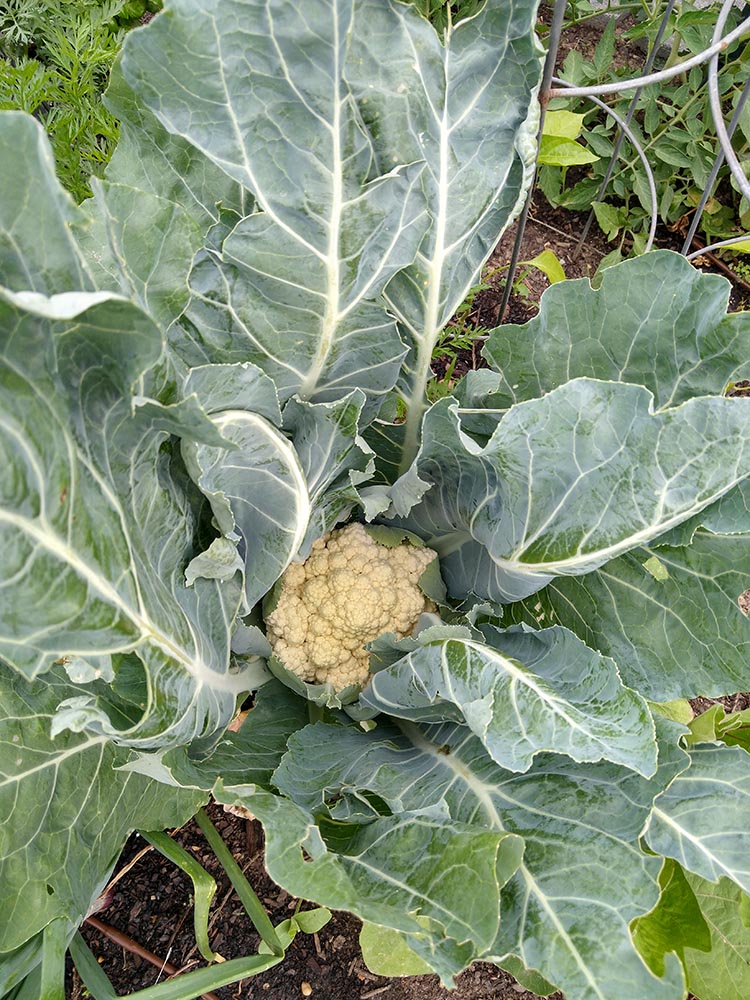
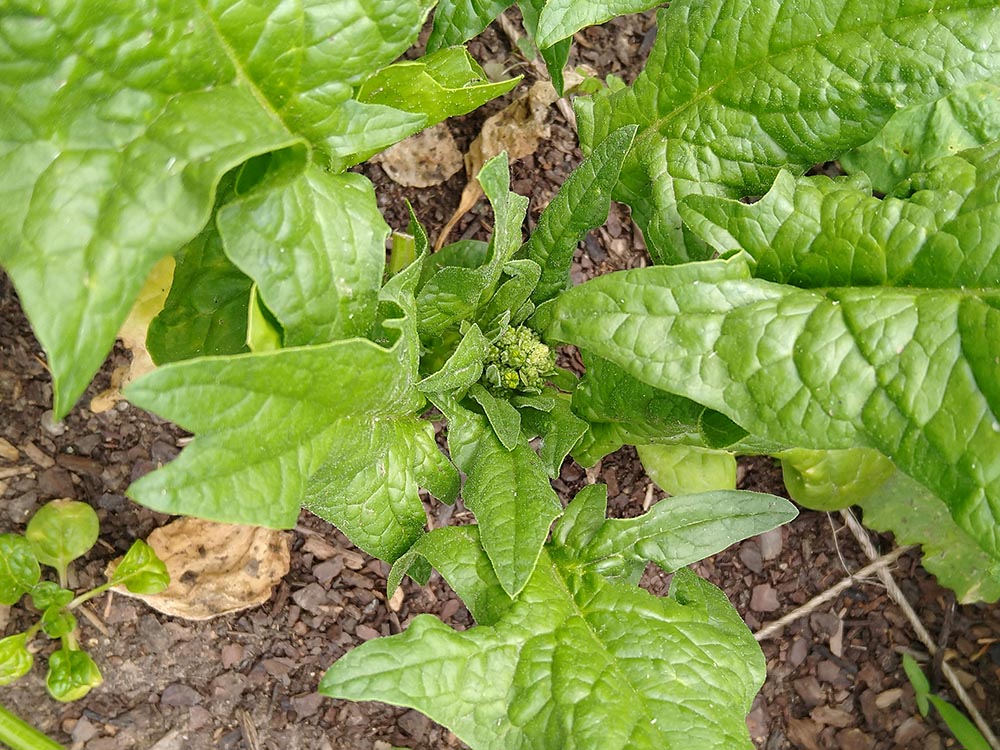
I also harvested the cauliflower.
In the last about 2 weeks it has gone from only green leaves to having a good sized cauliflower head.
As you can see in the pictures I tied the leaves around the white cauliflower to keep it from turning yellow or brown in the sun. Covering the head is called blanching. You don't need to do it. Yellow Cauliflower grows and tastes the same, it's just yellow.

I'm sure the eggplant is glad to have the cauliflower gone. It was realy crowding it.  The cauliflower square will be planted with potatoes about July 1 for a fall potato harvest.
Picture
Picture
Natalie Bumgarner planted watermelon, cantaloupe and yellow squash when she was here about two weeks ago. They are all up and have a high germination rate. Of all the seeds only one of the cantaloupe did not come up. Because we double planted all of them, that won't be a problem.  
Picture
Watermelon
Picture
Cantaloupe
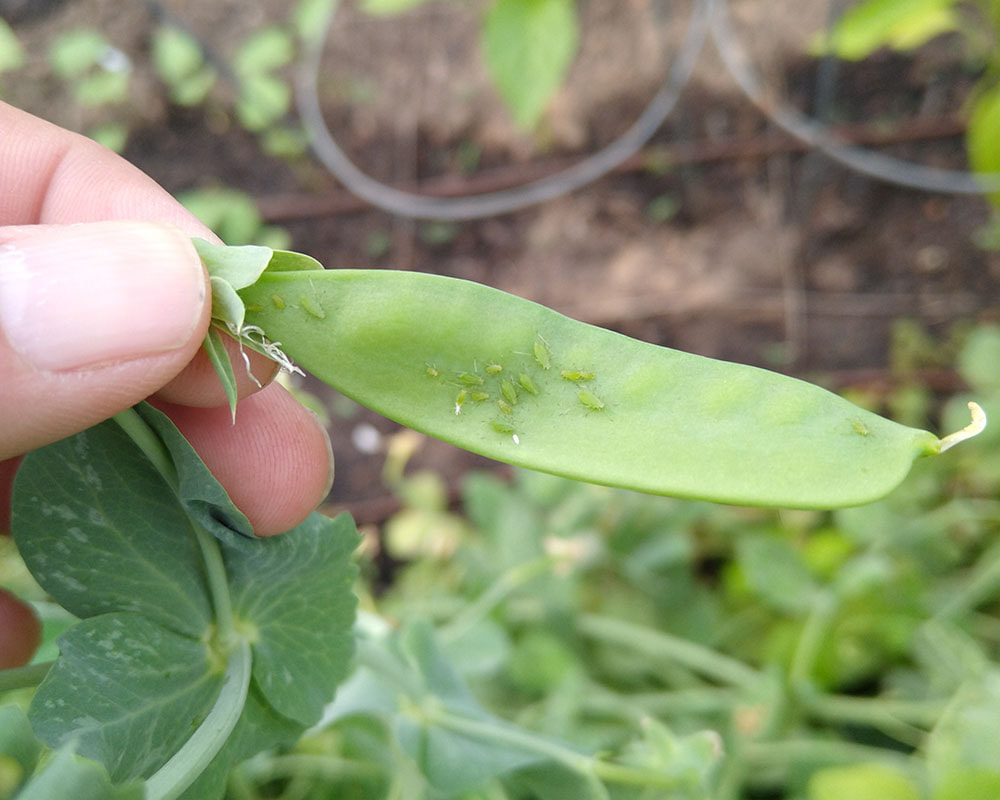
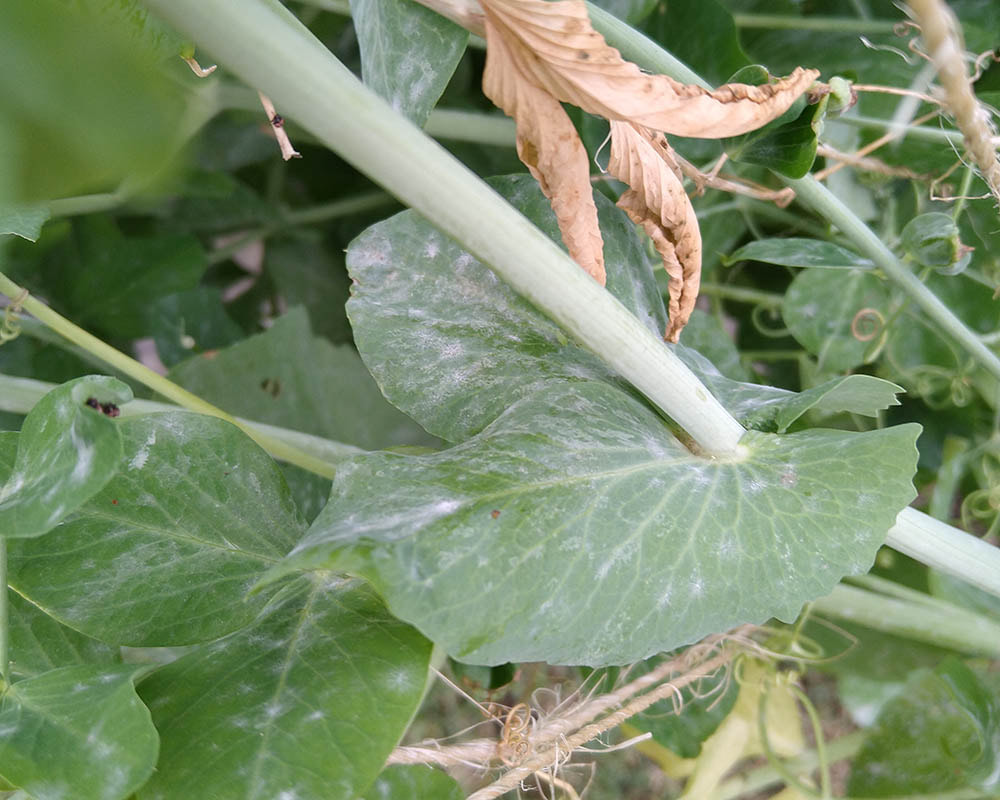
The peas are still going strong. We are getting about a pound a week from them. I am starting to see some problems however. Today there were aphids on the peas and there is also some powdery mildew. I think the peas are almost done so I am not going to do anything about it for now. If the aphids get too much worse I might spray with insecticidal soap. Hopefully the ladybugs will move in and take care of the problem for me.
Picture
Aphids
Picture
Powdery Mildew
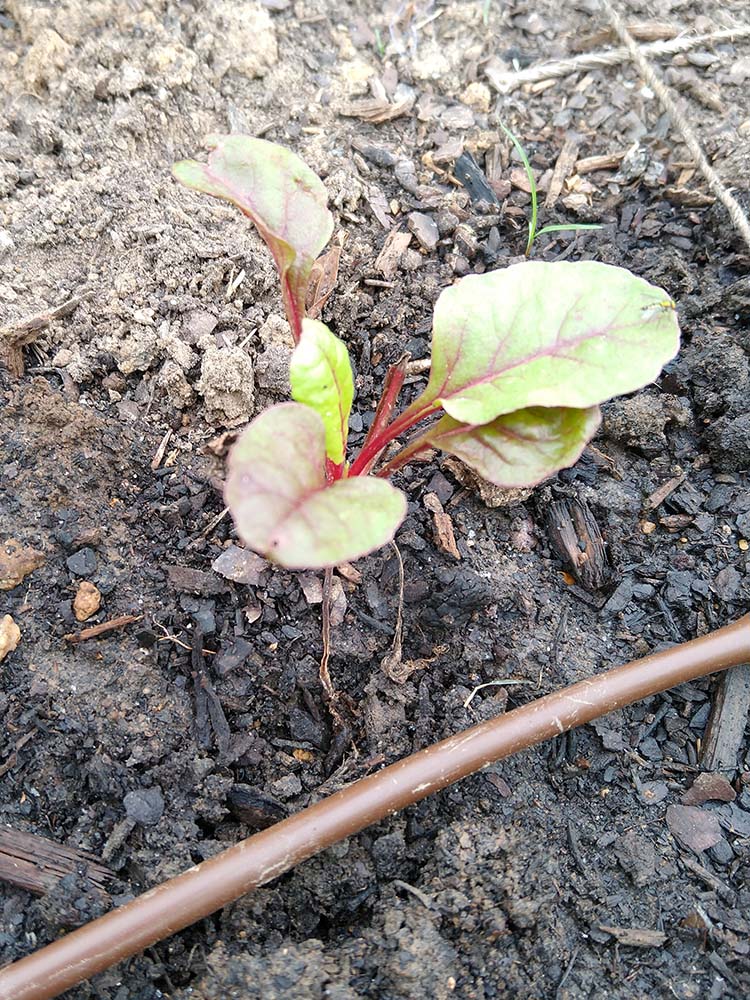
The little Swiss chard finally looks happy. It was the only one of seven to come up (four in the original planting and then three in the replant). It has looked like it was on death's doorstep until this week. Hopefully we can harvest something from it later in the year.
Picture
0 Comments

Drip Irrigation Here We Come!

5/16/2022

3 Comments

 
There are many benefits of raised beds: you get to choose the soil you are growing in, you don't have to bend down to tend the garden, and there is good drainage so you don't get any root rot and similar problems. One of the down sides is you have good drainage. With the recent summer heat it gets hard to keep the garden watered with a hose, it drys out too fast. So, I have installed a drip irrigation system on a timer to water it for me.

How I Did It

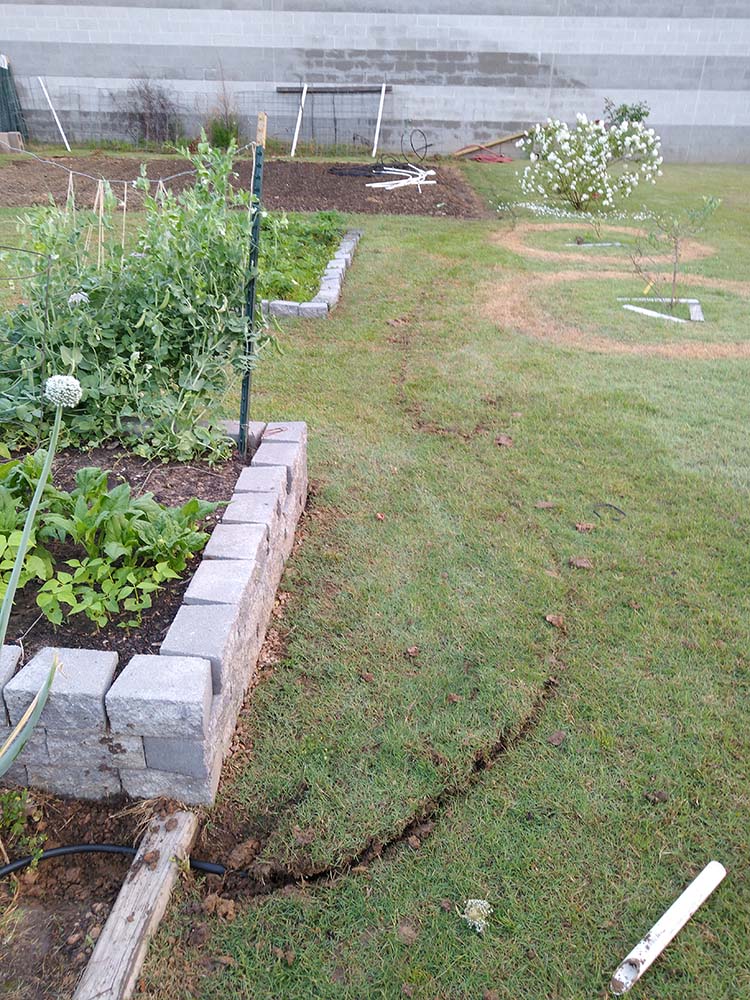
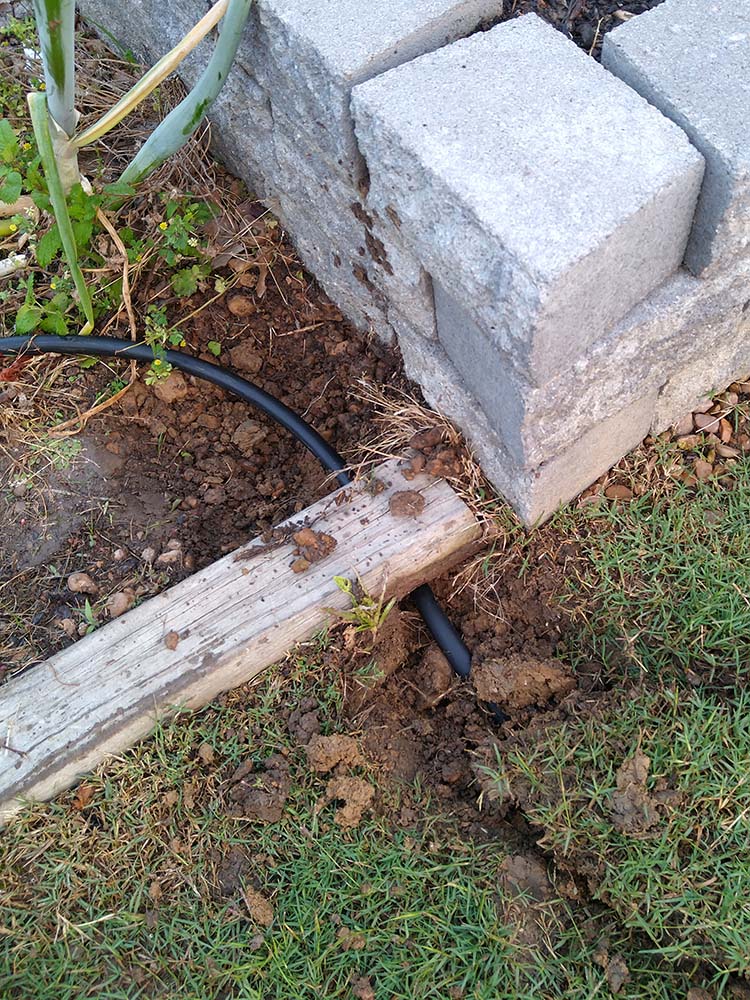
The hardest part was getting the water to the garden. It is about 75 feet away from the hose bib. I used 1/2" black irrigation pipe. I used my shovel to cut a long slit in the grass from the hose bib to the garden. Then I went down the line lifting up the grass and pushing the hose into the open space underneath.

I had to go around the raised bed so the pipe would come up in the walkway. This will save it from the lawnmowers and weed-eaters of the landscaping crew.
Picture
Picture
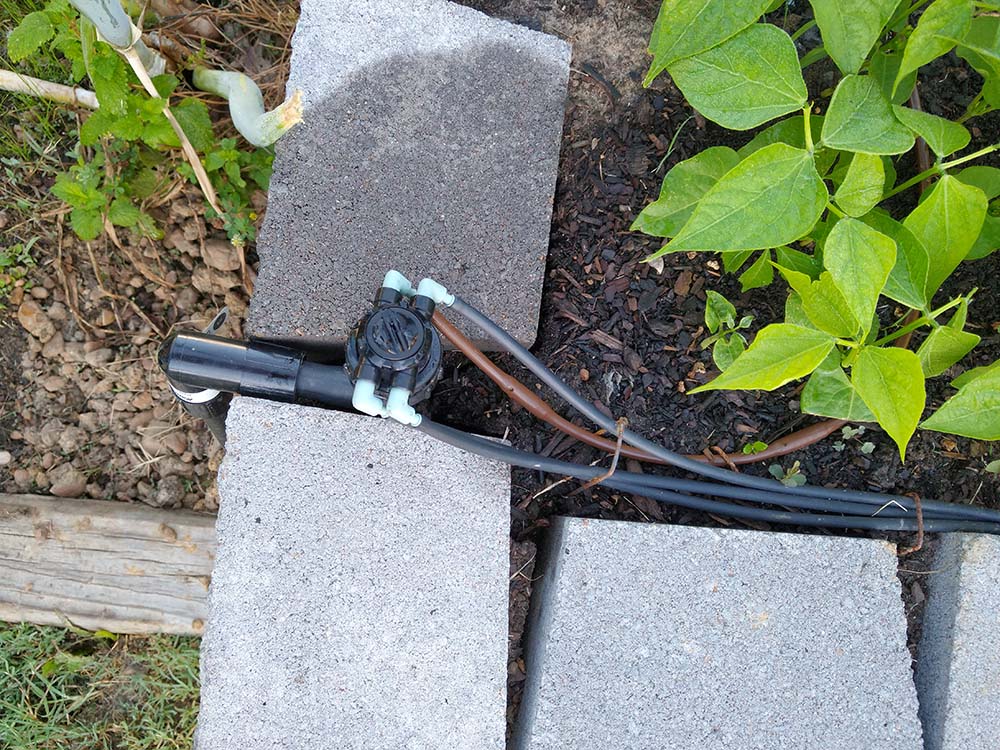
At the garden end, I turned the pipe up with a few elbows and put a 4-way manifold on the end.
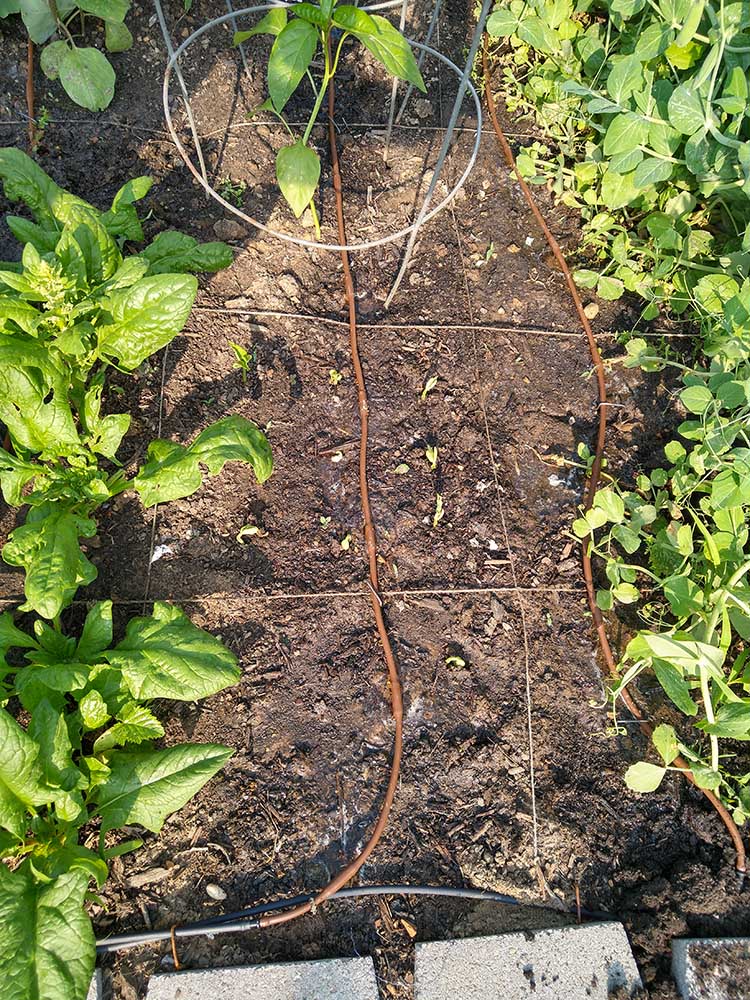
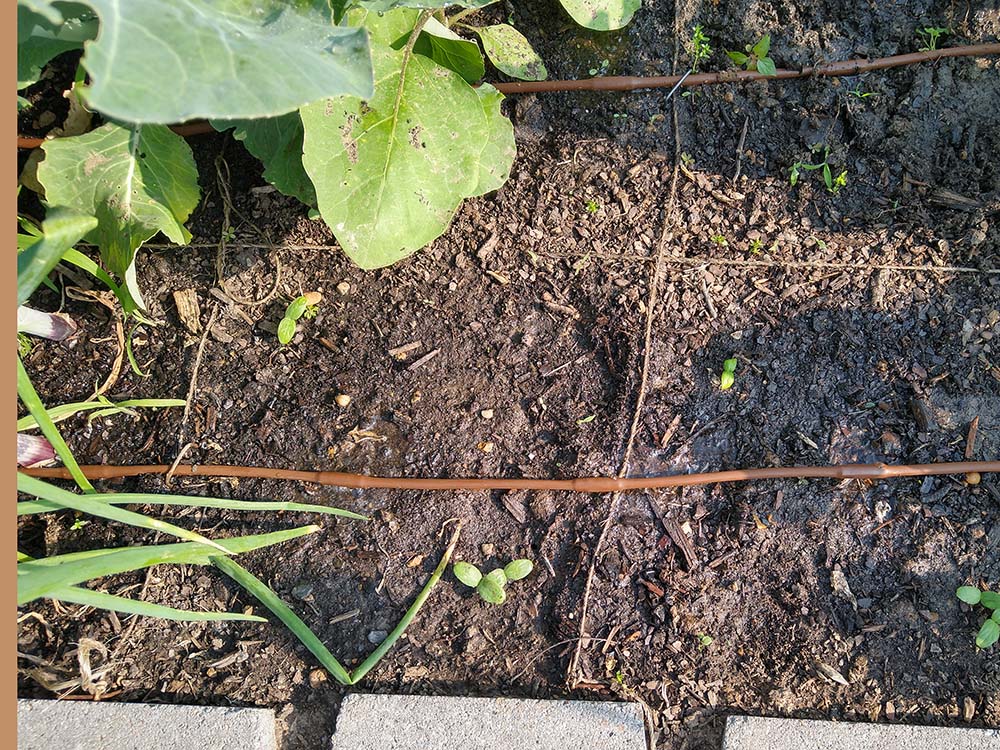
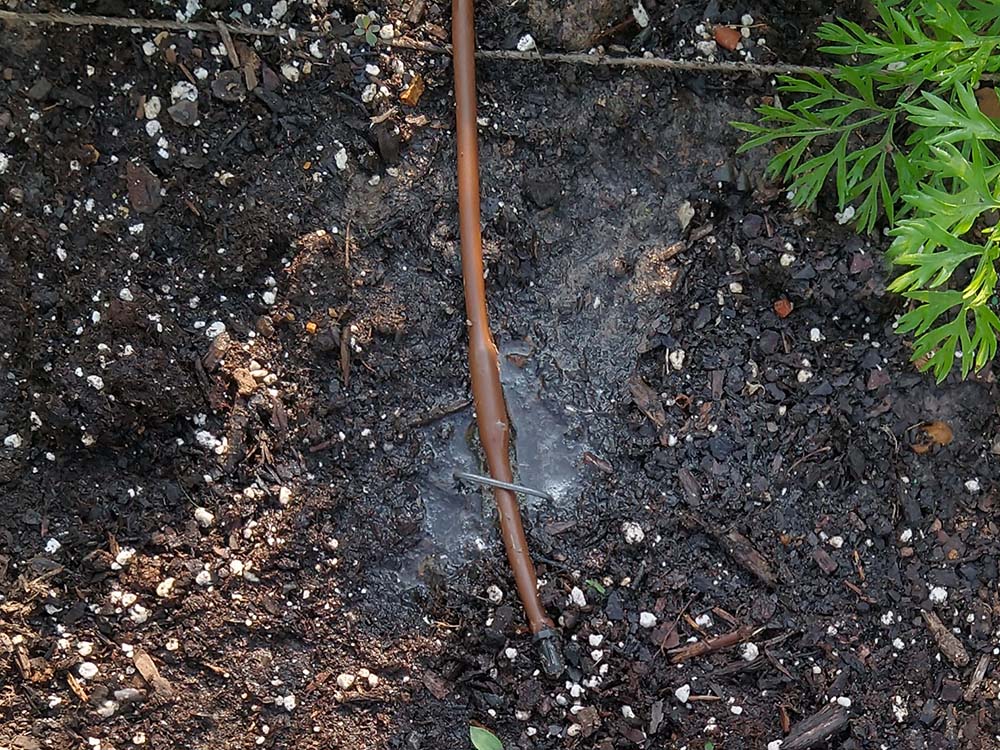
To the manifold I attached 1/4" black drip irrigation tubing that ran to the end of each row of the garden. I attached drip emitter tube at the end of the black tubing. The emitter tube (brown in the pictures) has a small hole every 6 inches or so along the tube.  I ran the emitter tubes down the center of each row of squares long ways. and secured them with landscape staples to keep them in place.
Picture
Picture
Picture
Picture
Picture
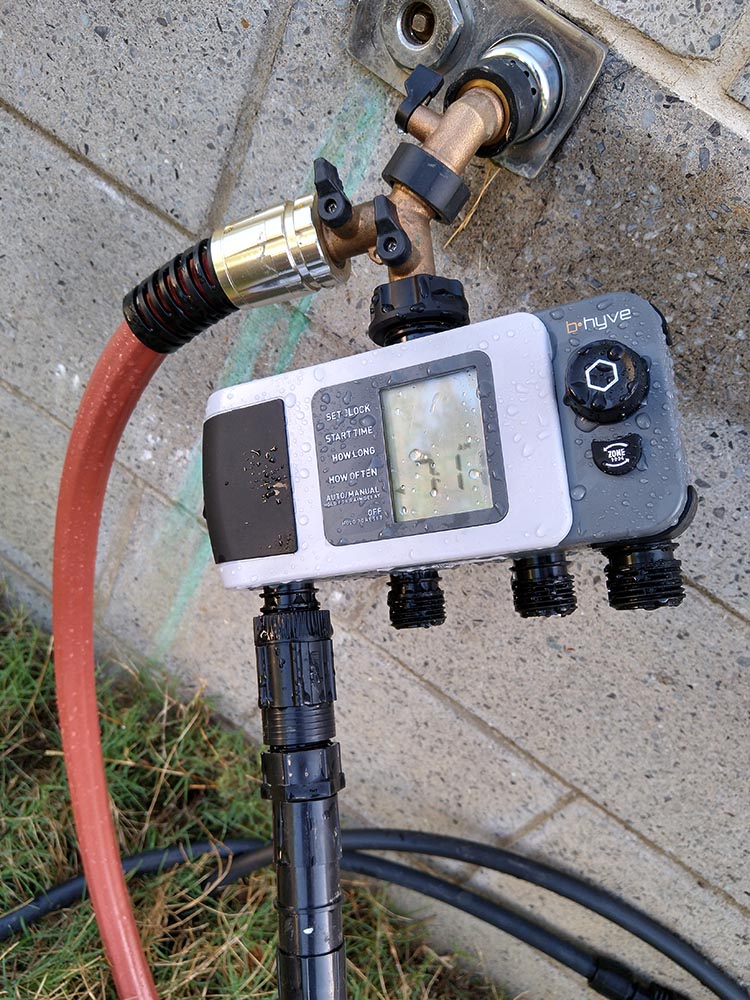
I put a Y between the wall the the timer so I could still use the hose.
I hooked it all up and turned it on and it works great! From my tests it looks like I will need to run the system for about an hour a day. Each hole in the emitter tubing drips about half a gallon per hour. I am going to set it to come on at 5AM every morning to give the plants the water they need for the heat of the day.

The project took me about 2 hours and cost about $55 without the automated timer. $17.47 of that was the 100 feet of 1/2" tube.

I will clean up the drip tubing at the end of the growing season, but the big long tube underground should last for years, so even after the square foot garden is done, I can use that pipe to water our three raised beds either with a drip system or with a regular garden hose. That beats having the lug the hose over and then coil it back up in the heat of summer.

Tomato Trellis

I also put up a piece of cattle panel for the tomatoes to climb. I probably should have done that a week or two ago because the tomatoes took some persuasion to lean over on the panel. I used some pieces of plastic grocery bag to tie them to the panel. While I was leaning them over I pruned off some of the lower branches of the oldest tomato plants to thin them out. I also pruned off some of the bottom leaves that were in the dirt. They were starting to show signs of blight. Getting rid of them will help keep the blight from spreading up the plant, or at least delay it.
Picture
3 Comments

Hot Weather Means the End of the Cool Season Crops

5/11/2022

0 Comments

 
Here in Memphis this week we are going to get into the 90s and that will do in all of our leafy greens. Late last week UT Assistant Professor of Residential and Consumer Horticulture Natalie Bumgarner came in from Knoxville to tape a few Family Plot shows and with her help we harvested the rest of the mustard and turnip greens (including the turnip roots), and lettuce.
Picture
Natalie harvesting the greens
Picture
Lettuce right before harvest

Cool Season Leafy Green Totals

Here are the total harvest we got from our cool season leafy greens
Vegetable
Total Harvest
Area in Garden (sqft)
Notes
Radish
3.5 lbs
2
32 Radishes
Spinach
.858 lb
2
There should be one more harvest of the spinach
Green Lettuce
1.12 lb
1
4 leaf lettuce plants
Red Lettuce
0
1
No seeds germinated
Mustard Greens
1.71
1
 
Turnip Greens
.7 lb
1
 
Turnip Roots
.58 lb
1
5 turnip roots
Peas
1.08 lb
4
They are still going strong. We should get much more here
We also have picked 1.08 lb of peas so far. That should keep going for awhile. We may need to push back the cucumber planting to keep the peas going.

Planting

While Natalie was in Memphis we taped a segment with her planting peppers. She planted three 'Big Bertha' pepper plants in the garden. One of them was grafted and she talked about the benefits of grafting and showed how to plant that one too. While she was here we also had her plant an eggplant, watermelon, and cantaloupe.

Also in the last few days we have planted summer squash and another round of bush beans. The summer garden is getting going. We have seen some flowers on the tomatoes so we should be getting the first of those in a few weeks.


Picture
Natalie planting peppers. Watch for the segment on Family plot in a few weeks
Picture
The three pepper plants in the ground. The middle one is grafted.
Picture
Planting Eggplant
Picture
Summer straight-neck squash seeds
Picture
The next two squares of green beans.
Picture
The spring rains have slowed down so I need to water ever couple of days. Because it is a raised bed with loose soil (mostly compost) it has very good drainage and dries out fast. I will be installing a drip irrigation system so the garden will water itself. We are looking for maximum production so having very dry soil for even a day or two could realy reduce the harvest on some plants.

We have plants growing in almost every square now. I am having trouble finding sweet potatoes so if I can't find some I will repurpose those squares to something else.
0 Comments

More Growing, More Harvesting, and a Skink

5/5/2022

0 Comments

 
Every time I go to the garden I am surprised at how much it has grown in only a day or two. I am also kind of surprised about how much needs to be picked again. Last time I harvested I realy cut back the spinach hard and I thought it would take a while to get it to regrow, but it is back with huge leaves and was ready to pick again. Same with the greens. It is starting to get warmer, and this time I saw the evidence of the spinach starting to bolt so I cut it way back again. Totals for this leafy greens harvest were:
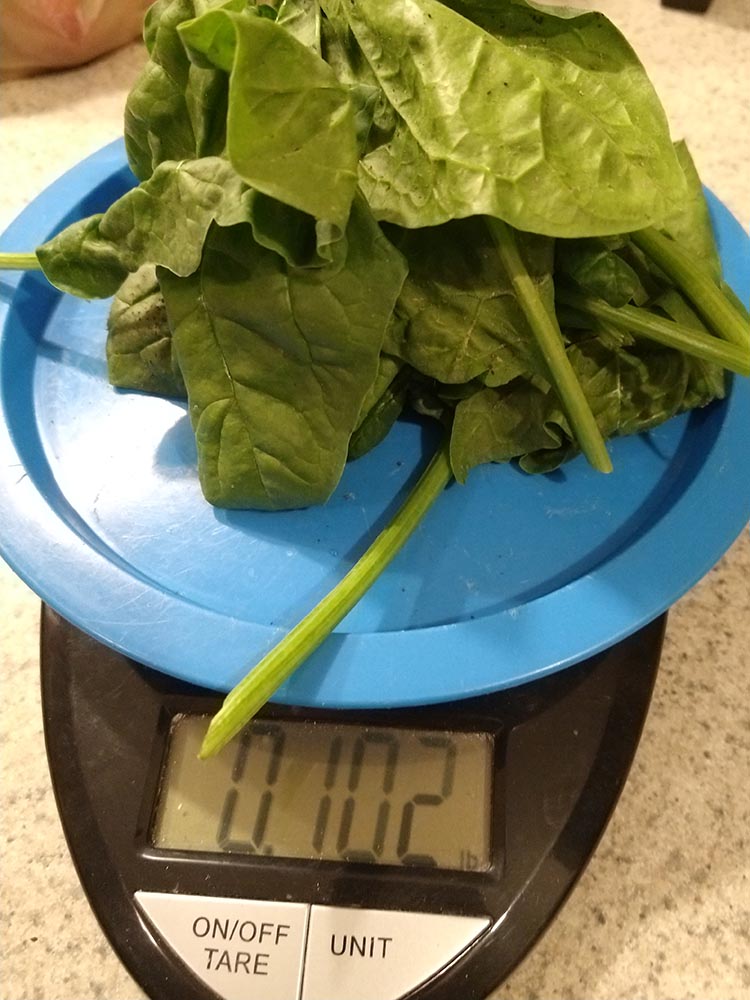
Spinach: .328 lb
Mustard Greens: .400 lbs
Turnip Greens: .152 lbs
Also the beans are up and growing. It is about time to plant the next round
Picture
This spinach is starting to bolt
Picture
Picture

We Have a Worm in the Cauliflower

Picture
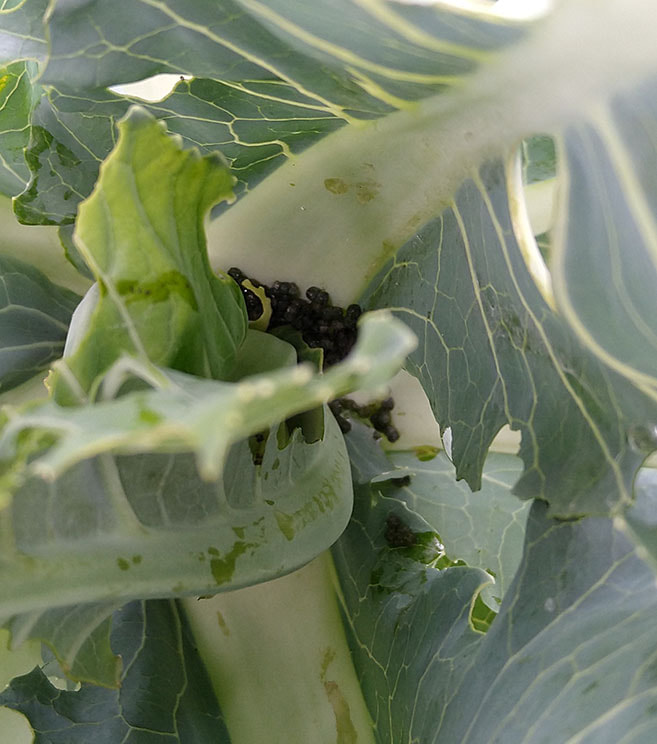
I was at the garden in the early morning, and the first thing I do is walk around and look at everything. When I looked into the middle of the cauliflower I was an imported cabbage worm. I was excited, but did not get a picture. When I went back later, I could not find it. I wanted to catch it and feed it to the skink (more on that later). I am sure it is still there, but just hiding from the sun. It has left a large pile of poop at the bottom of the leaves. I will be spraying BT (Bacillus thuringiensis) the next time I am there.

More Peas

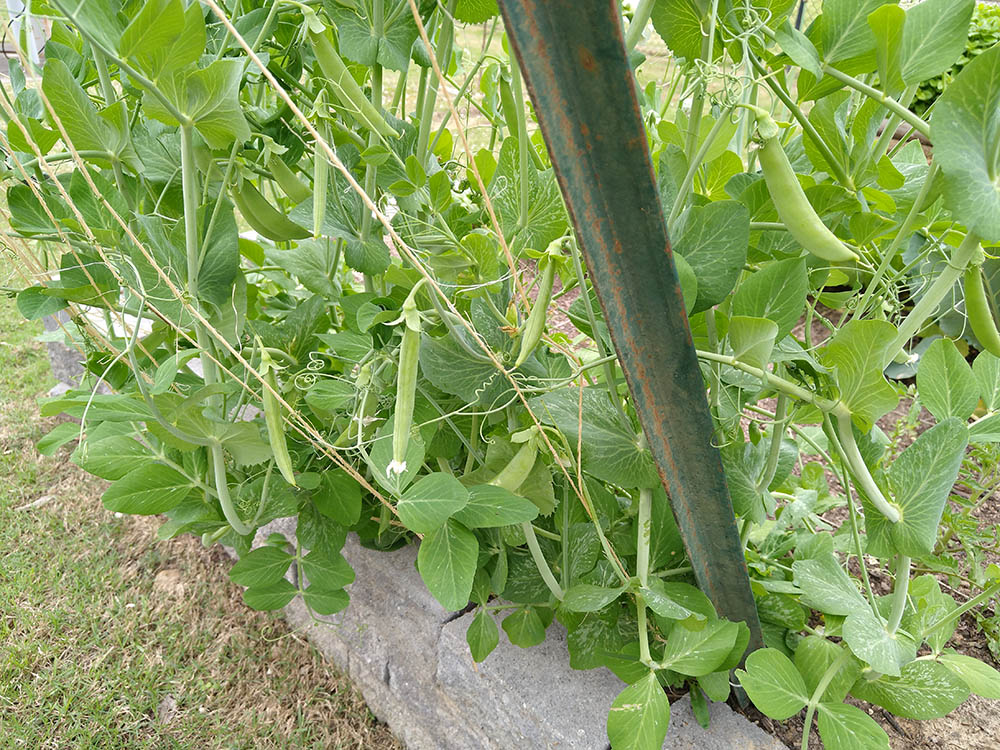
The peas are coming on. I picked 24 more of them totaling about .2 lbs. There are a whole bunch that were just small enough not to pick. The peas are climbing up the trellis, but it is also interesting that they are somewhat self supporting as well.
Picture

Basil

One of the four basil plants we planted died so I replanted. Unfortunately there were no purple basil available so we had to replant in green. Also I noticed some of the basil is looking like it might have some nutrient deficiency going on, probably with nitrogen, so I side dressed the basil with a little nitrogen and also side dressed the tomatoes, lettuce and onions. I did not side dress the onions heavily like I did last time because the cauliflower is so close. With too much nitrogen the cauliflower will never head.
Picture
I am not sure why the close purple basil died.
Picture
New basil planted. You can also see the fertilizer on the ground.

Now for the Skink

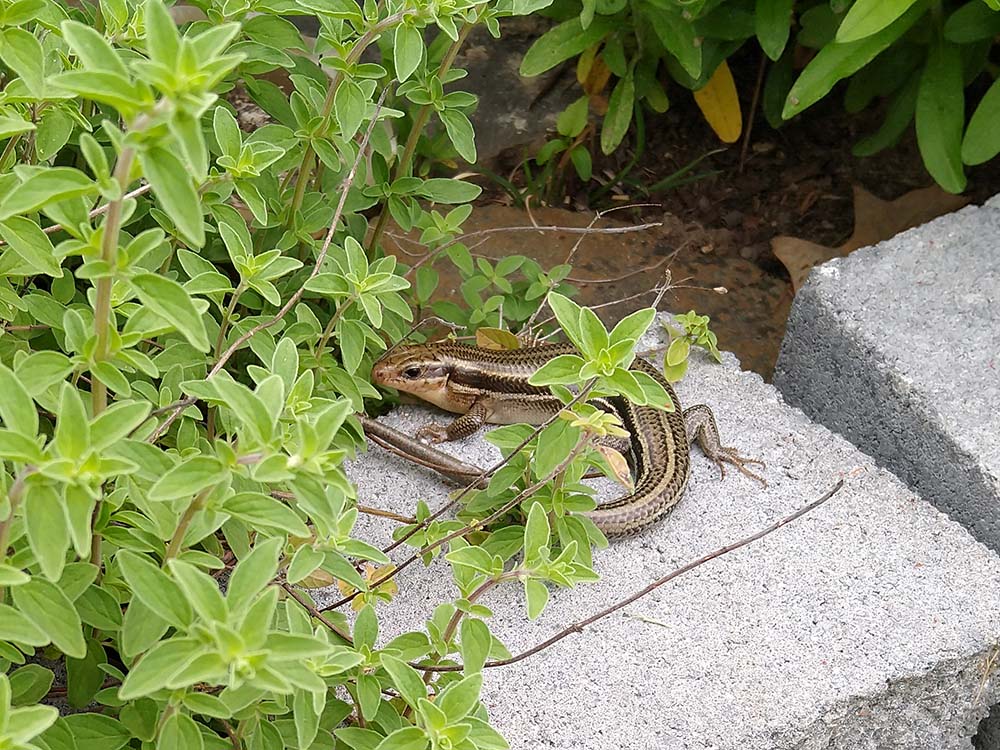
While I was working the the square foot garden I noticed a skink over in the pollinator garden. I don't like snakes so when ever I first see a skink I am very cautious, until I see the legs. Like I said, when I saw it I went to find the cabbage worm to feed it, but the worm was hiding. Smart worm.
Picture
Picture
0 Comments

The First Round of Beans are In!

4/29/2022

0 Comments

 
This year we are participating in the University of Tennessee Home Garden Variety trials run by Natalie Bumgarner who you have seen on Family Plot in the past (and we have her coming up again soon). This year we are going to do side by side comparisons of bush beans and cucumbers. The bush beans will be in the square foot garden bed. We have two varieties we are comparing: 'Antigua' and 'Dulcina.' I have never heard of these varieties so I am excited to try them out. We will have six squares in beans with two squares planted every two weeks. Bush beans tend to be ready to pick all at once, as opposed to pole beans that have a long harvest season. So we will plant one square of each kind every two weeks to stretch out the harvest.
We broke from the master plan for planting this one. We were supposed to plant were the radishes were, but I decided to plant the first seeds in the square that has not had anything in it yet. Next will be the former radish squares, then the squares that are growing spinach now. It has been unusually cool this spring so maybe we can get a few more weeks out of the spinach before it bolts.
Before I could blog about planting the beans they came up and are looking happy. There are a few plants that are being shaded by the turnip greens. They will just have to grow through them.
Picture

More Harvesting

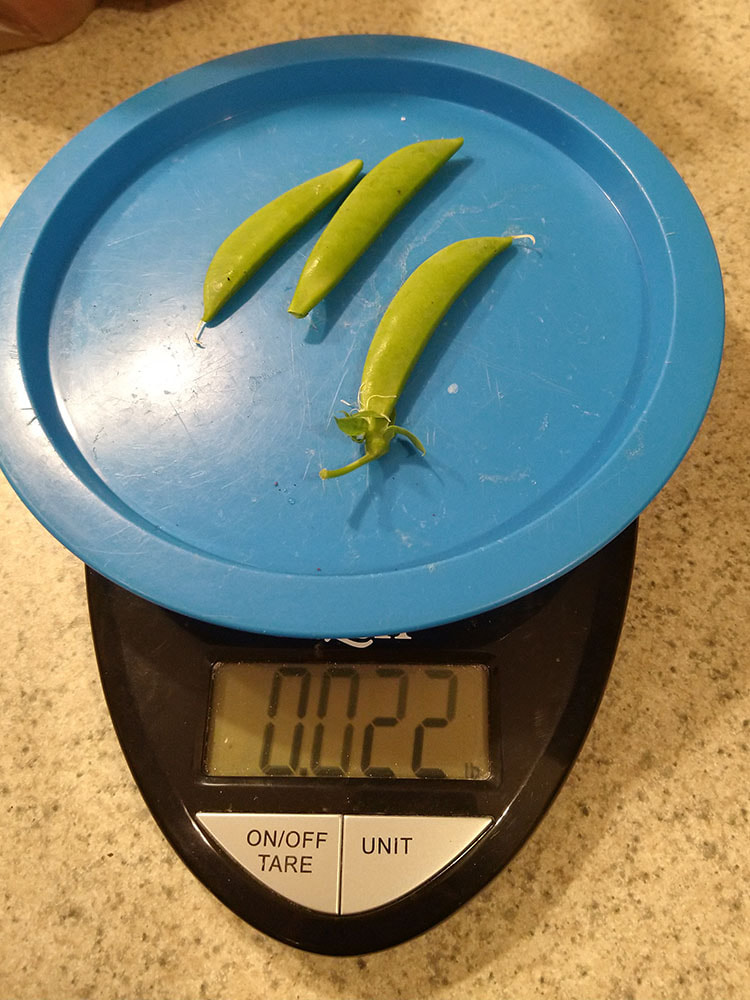
So the big harvest news (though pretty small based on what we picked) was three peas. There are more getting ready soon. That was a measly 1/20 pound, but they were yummy. I love to pick and eat peas off the vine, but I had to weigh them first in the name of science. We also picked an additional 1/10lb of spinach and a third of a pound of mustard greens.
Picture
Picture
Picture
0 Comments

More Leafy Greens to Eat & the First Bug Problem

4/26/2022

0 Comments

 
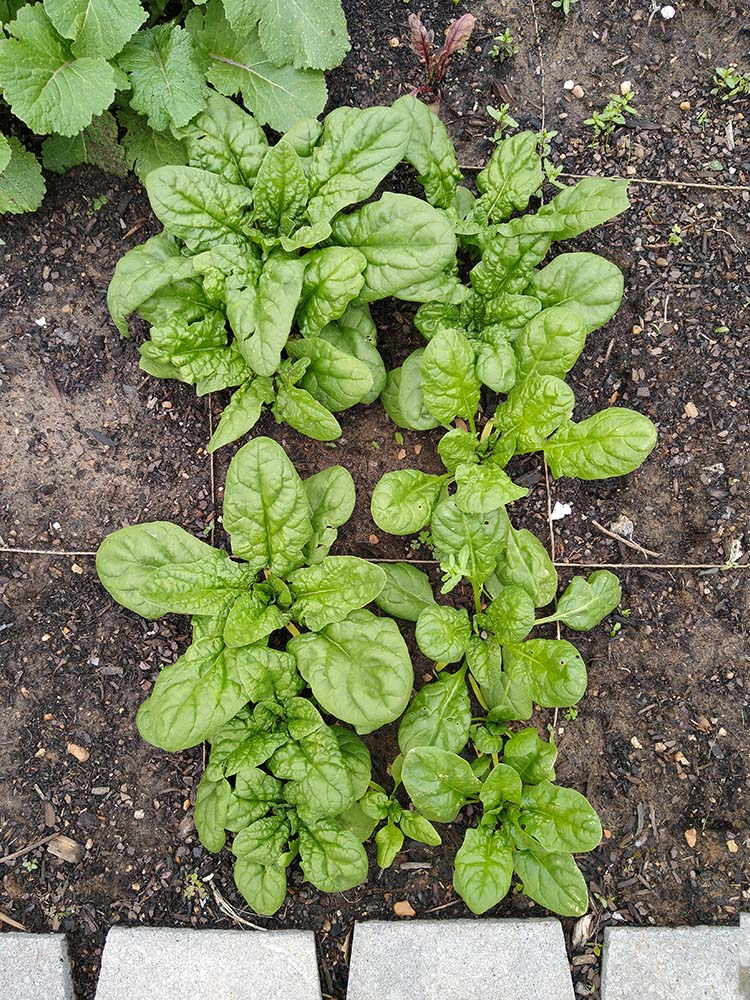
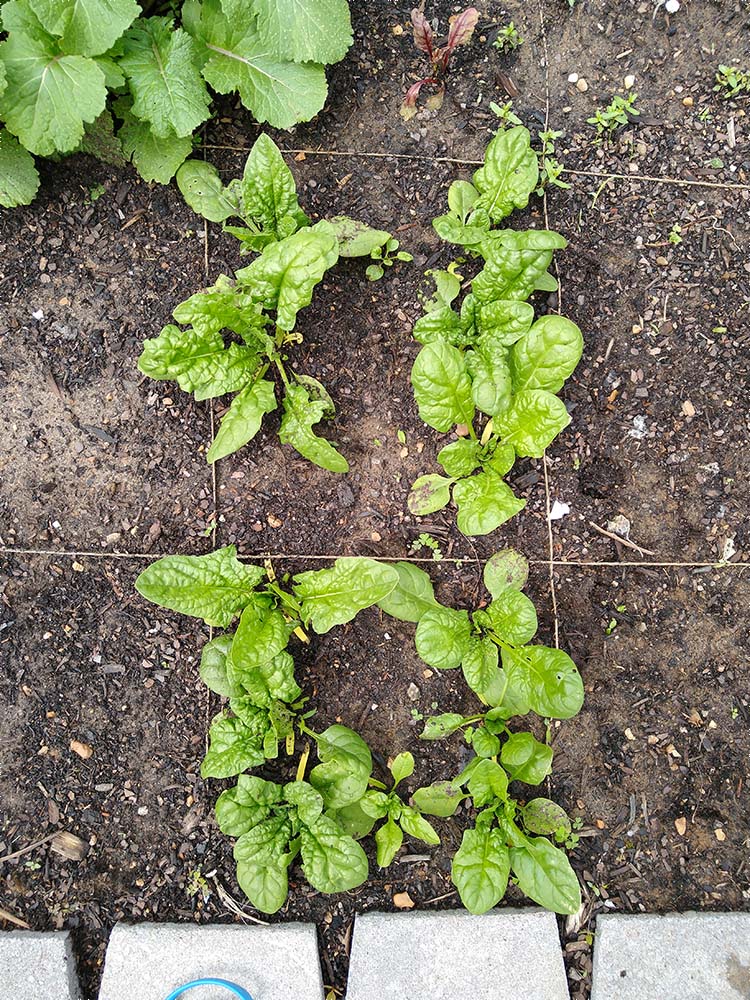
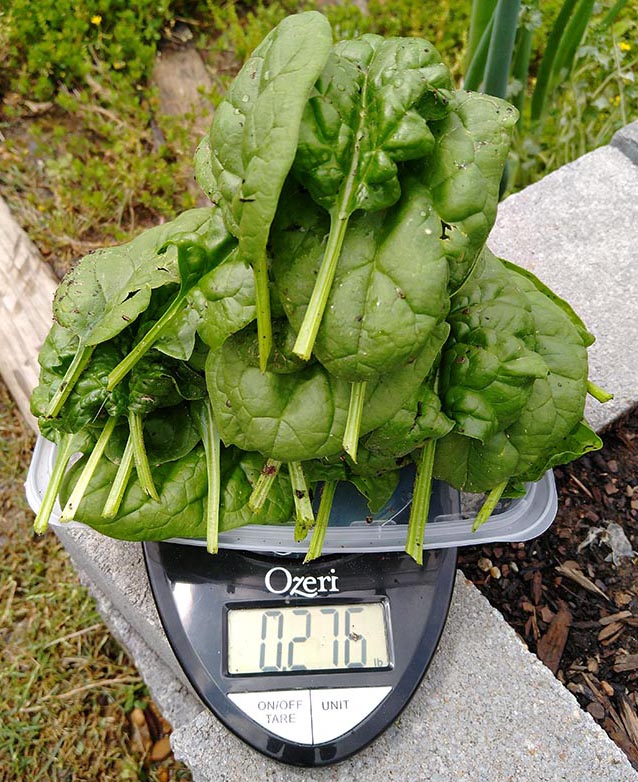
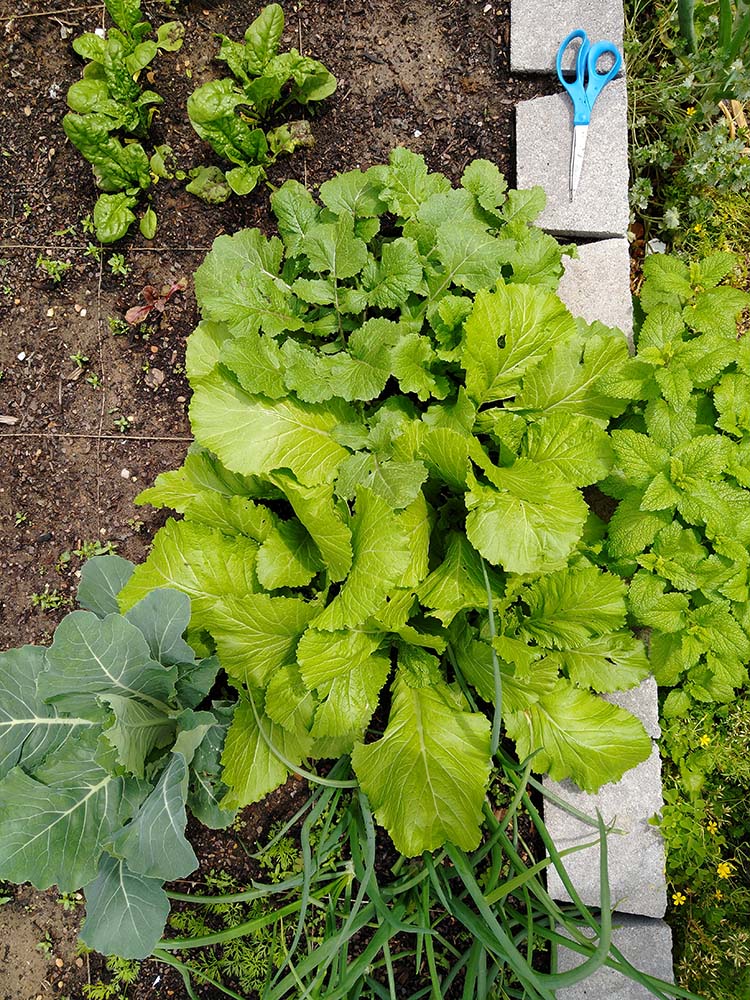
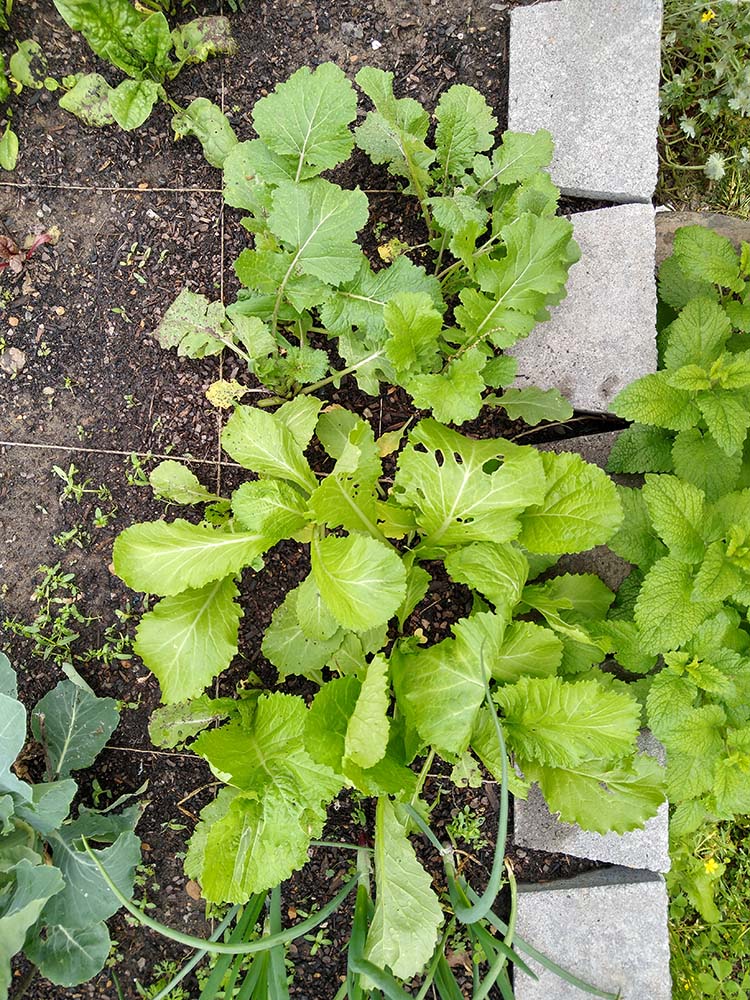
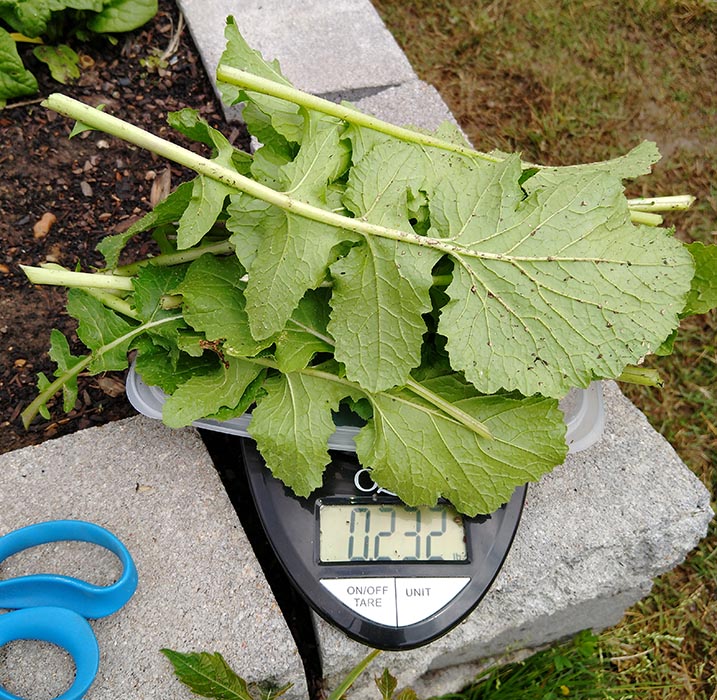
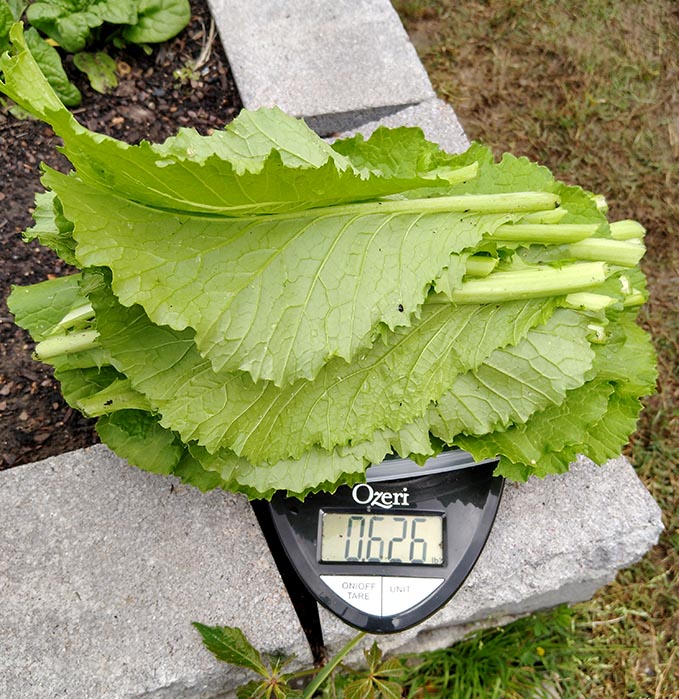
We have more good leafy greens to eat. We have made the first harvest on the spinach, mustard greens, and turnip greens. They were all needing a hair cut. To pick these we cut off the largest leaves, leaving the smaller leaves to grow more for a future harvest. Here is the results of each plant:

Spinach 1/4 Pound

Picture
Before
Picture
After
Picture

Turnip (1/4 lb) and Mustard (5/8 lb) Greens

Picture
Before
Picture
After
Picture
Turnip Greens
Picture
Mustard Greens

Something is Eating the Mustard Greens

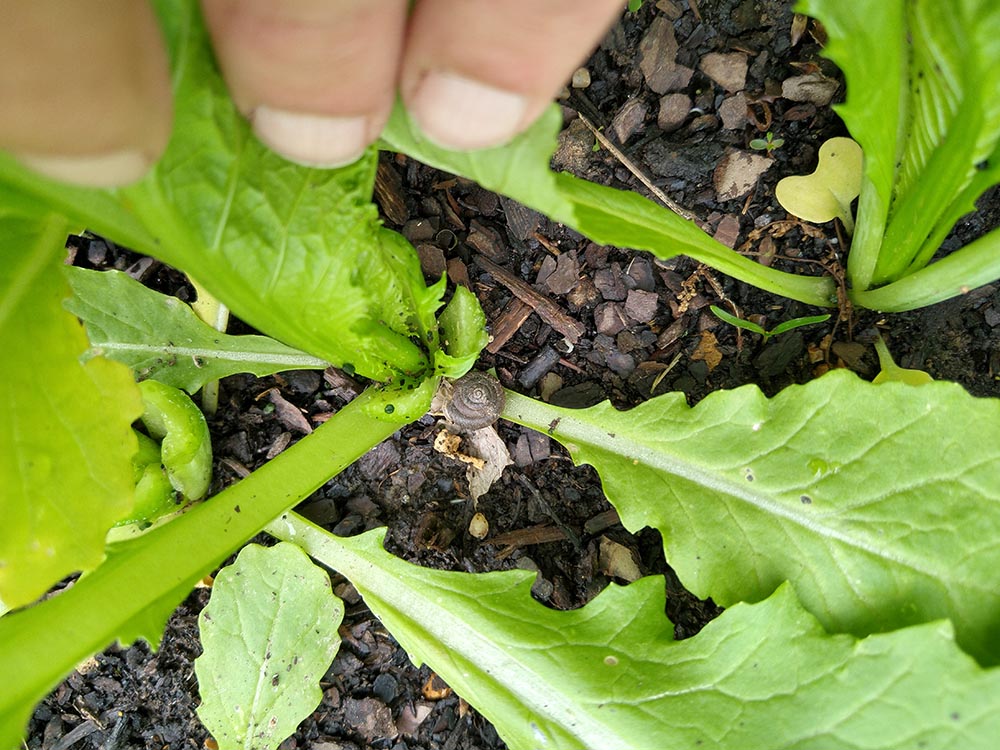
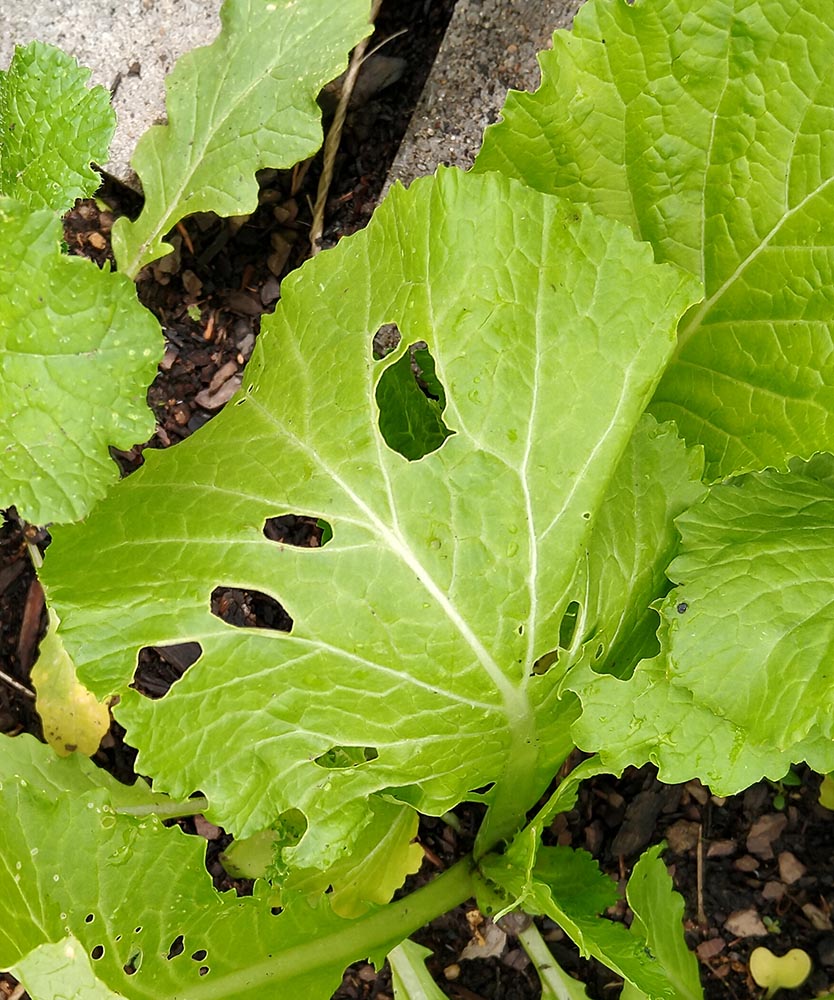
While we were picking the mustard greens we noticed holes in the leaves. Something is getting to them before us. We looked thought the plants and did not see anything, except a snail, which we removed. I don't think one small snail can do all that damage so we will have to keep an eye out for the other culprit.
Picture
Picture

Weeding

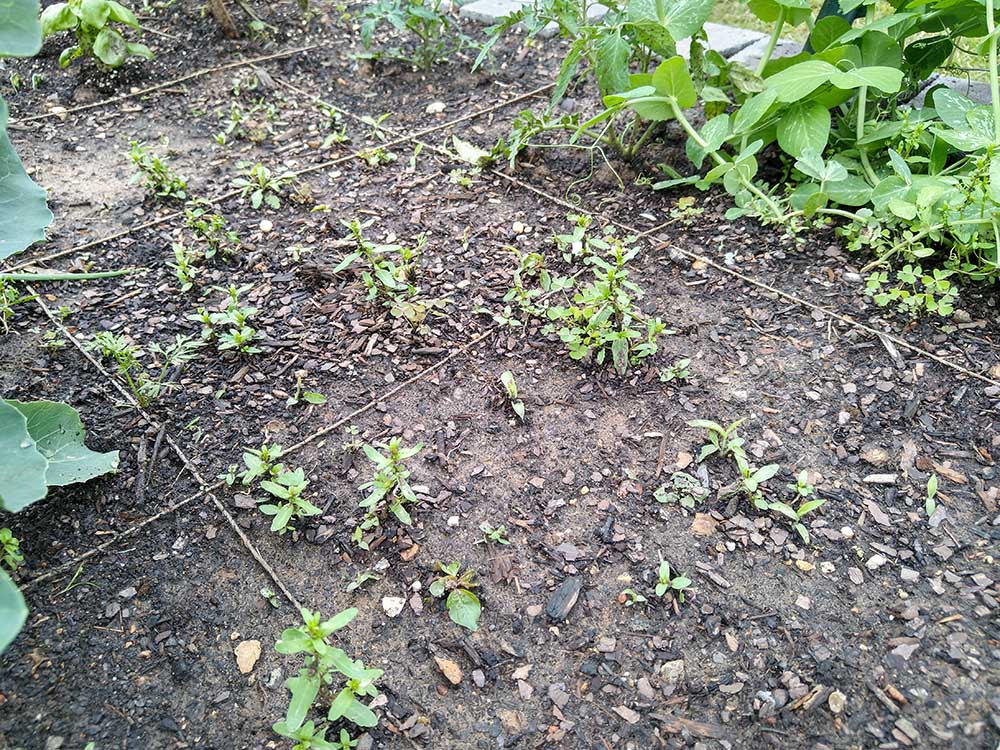
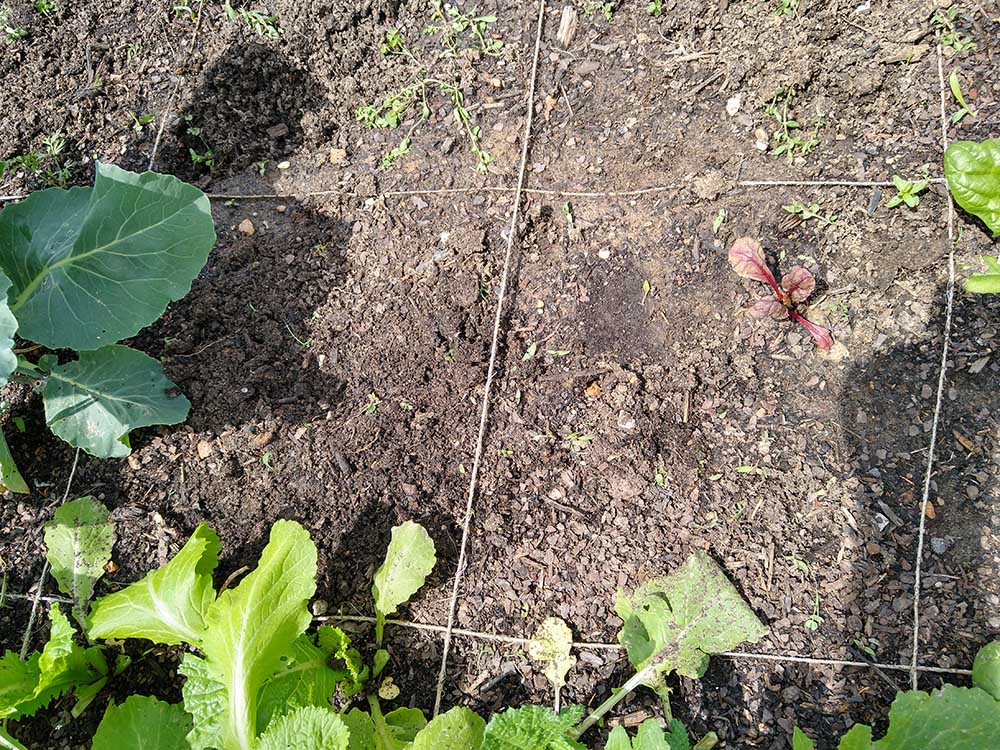
It is getting warm and weeds are growing great too. A great benefit of a small raised bed is that you can easily pull them without having to bend all the way over to the ground. Between hand pulling and a little work with a hoe these weeds are no more.
Picture
The weeds are starting to grow thick, but they are small and easy to get rid of.
Picture
After the hoe. Because there are no weed seeds involved, we will leave them to decompose.

A Garden Visitor

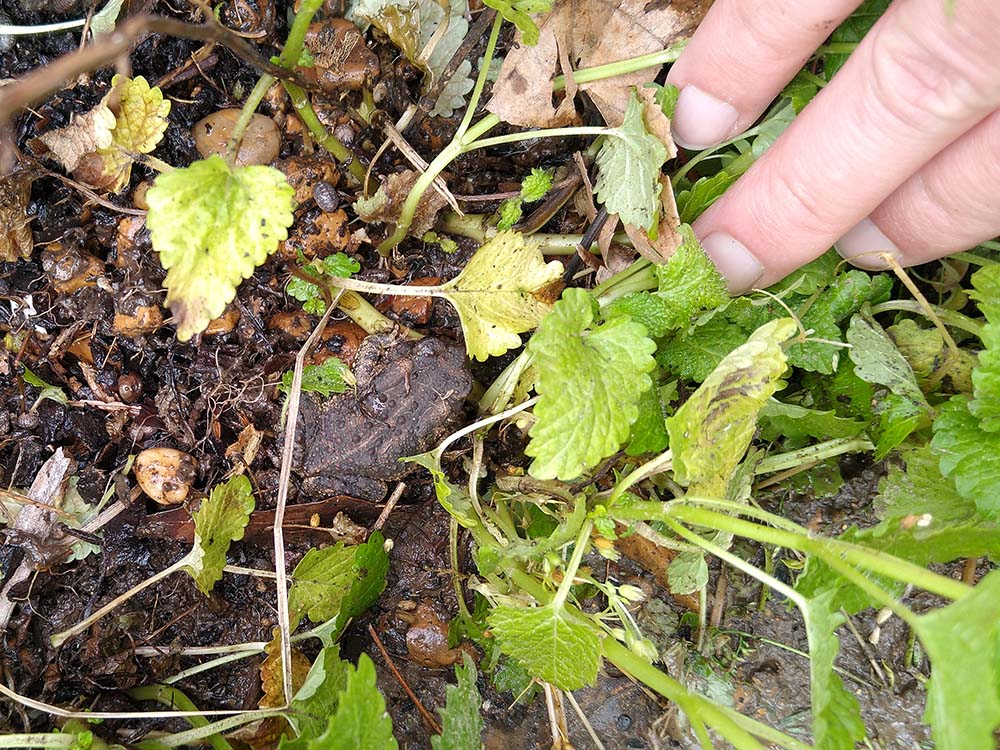
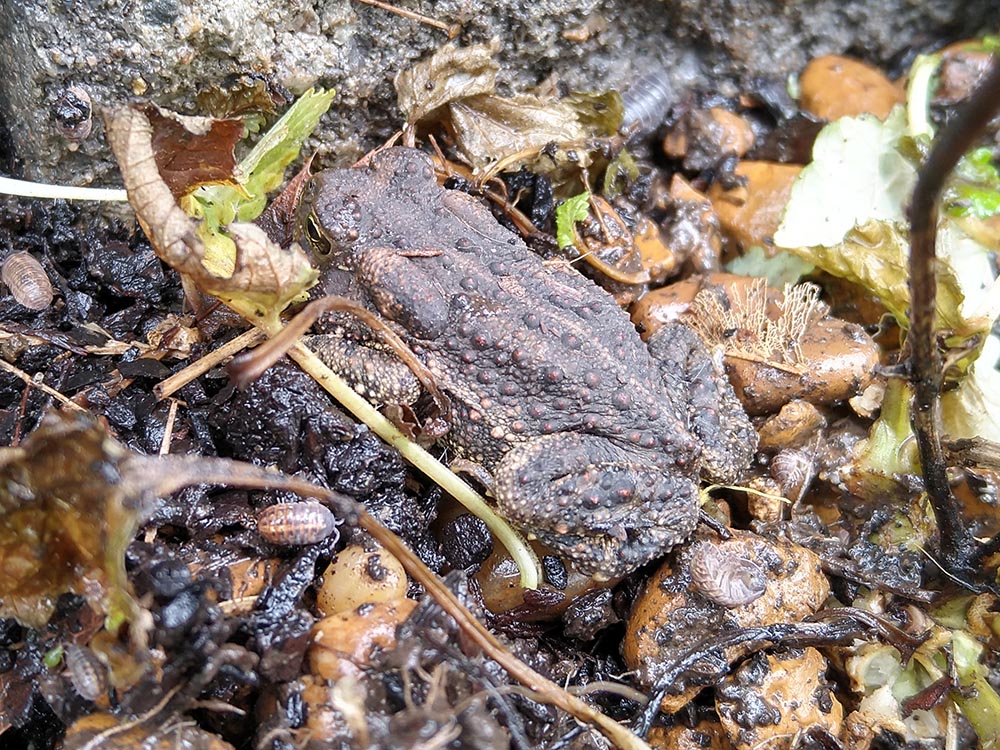
While we were pulling some lemon balm that was growing by the greens in the walkway around the bed we found a toad. Maybe he can take care of the mustard green problem... or maybe he already has.
Picture
Picture
0 Comments
<<Previous
Forward>>

    Square Foot Garden

    This year we are trying out square foot gardening. We will be growing a 4x8 garden and seeing what happens and finding out how much we can grow in such a small space.

    Categories

    All
    Harvest
    Layout
    Planting
    Plant Support
    Thinning
    Tomatoes
    Update
    Water

    RSS Feed

    Garden Status
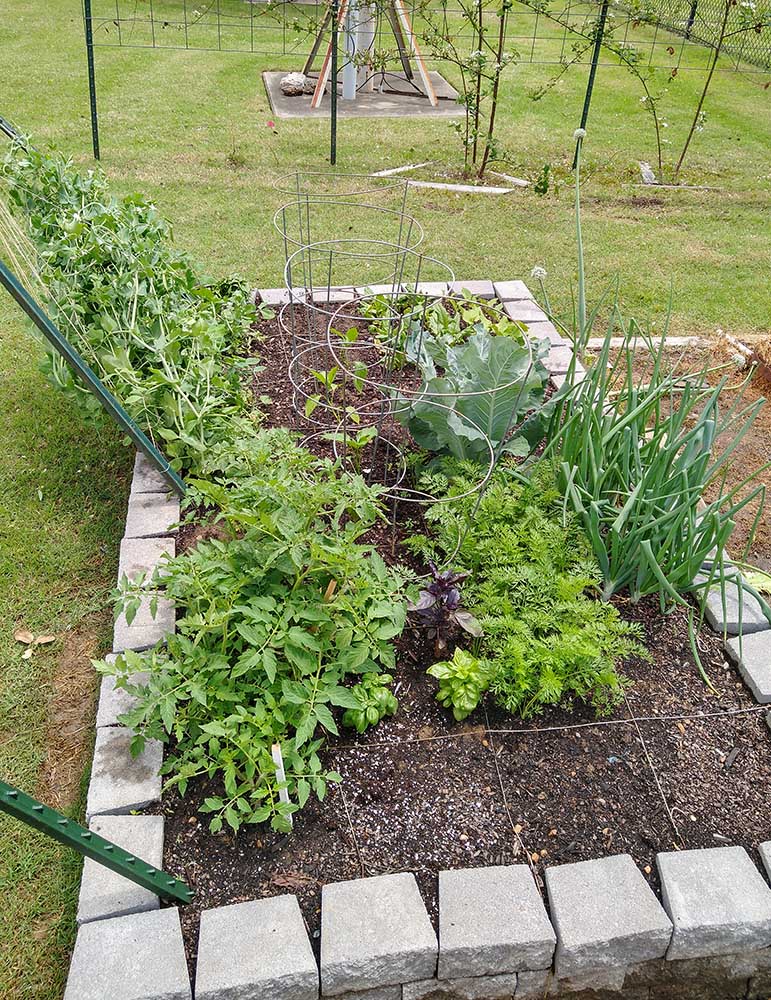
    Here is what is growing right now in the Garden:
    (click the picture to zoom)
    Master Plan
    We hope to follow this plan to be able to maximize our harvest. (click to zoom)
    Our Harvest So Far
    5.50 lb Radishes (32 plants)
    1.09 lb Spinach
    0.70 lb Turnip Greens
    0.58 lb Turnip Roots
    1.71 lb Mustard Greens
    3.71 lb Peas
    1.12 lb Green Lettuce
    0.83 lb Cauliflower (1 head)
    ​3.74 lb Basil
    3.96 lb Carrots (46)
    0.11 lb Green Beans (bust)
    24.17 lb Tomatoes (225)
    4.77 lb Onions (16)
    0.53 lb Summer Squash (2)
    8.69 lb Eggplant (25)
    9.40 lb Cantaloupe (4)
    9.90 lb Watermelon (3)
    21.19lb Cucumbers (34)
    3.17 lb Peppers (19)
    0.58 lb Oak Leaf Lettuce
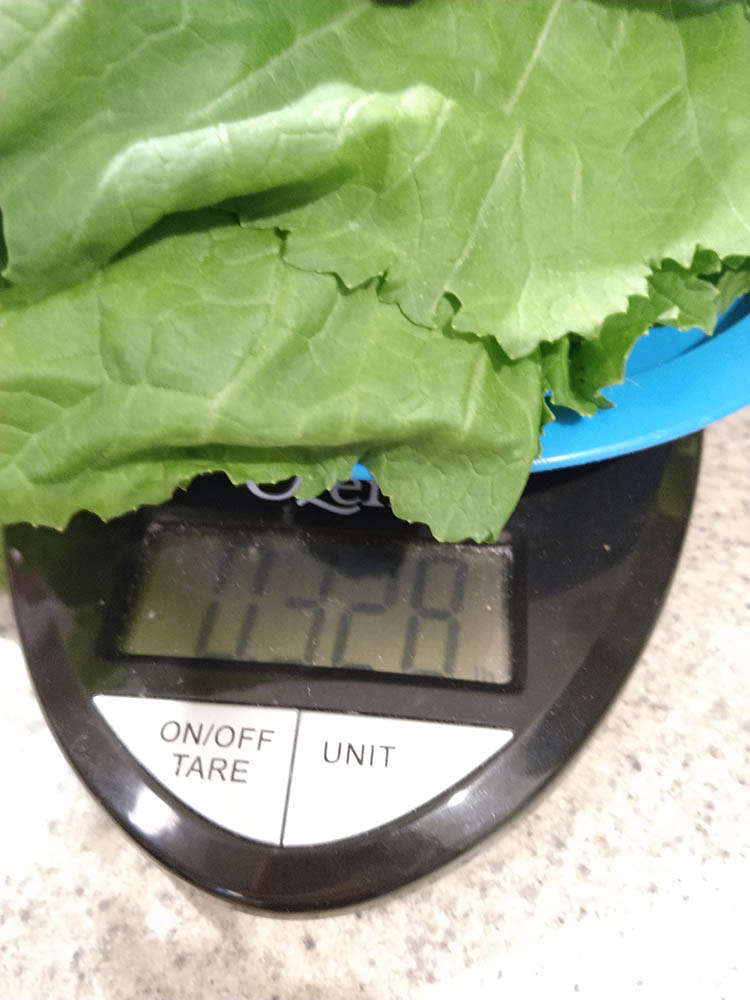
    1.20 lb Romaine Lettuce
    8.45 lb Sweet Potato (6)
Website Copyright 2026 Family Plot Garden
Content Copyright 2015-2026 Family Plot Garden & Mid-South Public Communications Foundation

  • Home
  • Watch
    • TV Schedule
    • Full Episodes Online
    • How-to and Informational
    • Questions and Answers
    • This Week in the Garden
    • Garden Notes
  • Garden Topic Collections
    • Apple Trees: How-to and Information
    • Peach Trees: How-to and Information
    • Tomatoes: How-to and Information
    • Square Foot Garden Blog
  • Resources
    • Soil Testing
    • Extension Publications
    • Gardening Resources
    • Blogs
    • Organic Gardening
    • Articles
    • Privacy
  • Guests
  • Contact Us
    • Ask a Gardening Gardening Question
  • Search